 Jeedeson Official Website
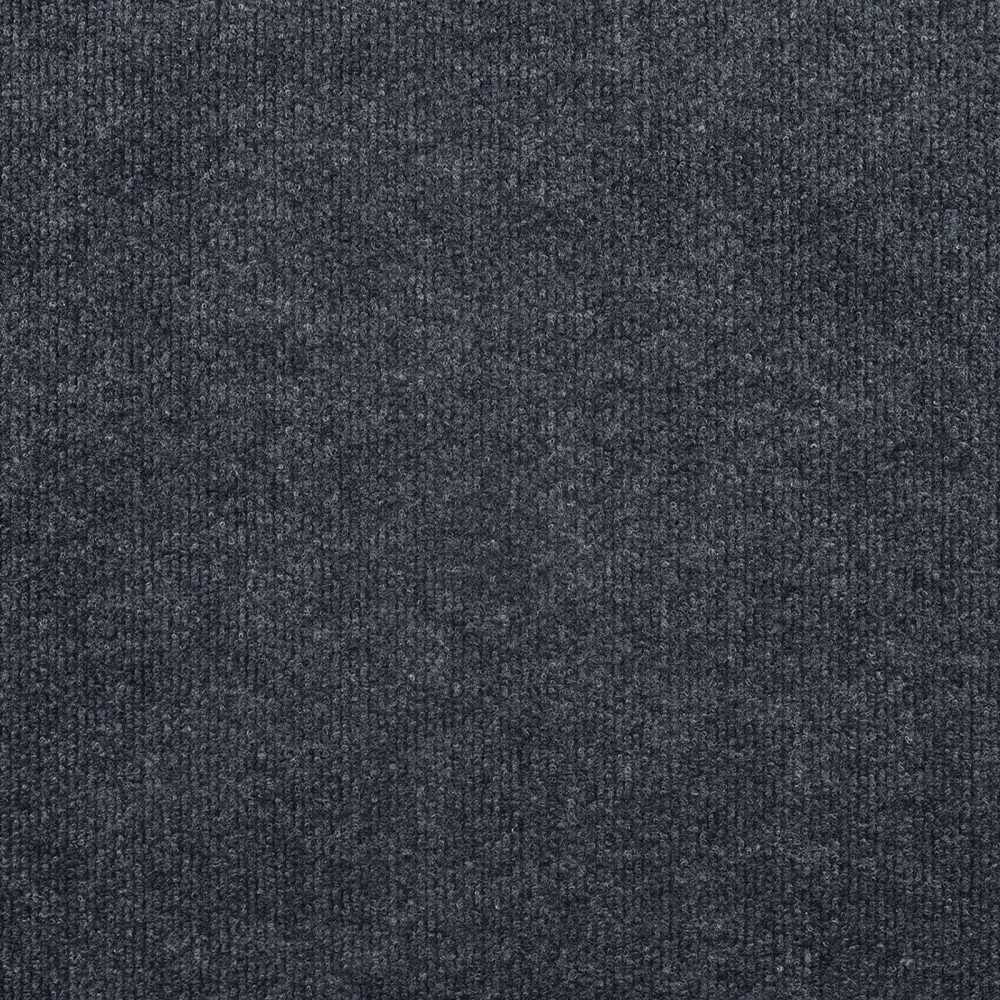
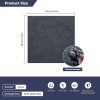
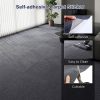
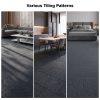
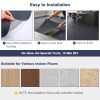
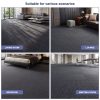

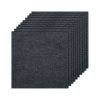
A cold concrete floor is the reason most basements stay unused. These 23.62 in. carpet squares go down straight over it, one peel at a time, and turn a raw slab into a room in an afternoon. No adhesive, no tack strip, no installer. The dark grey face is a heathered loop pile, so it reads as texture rather than as a flat block of colour, and it hides dust, tyre marks and the small bits of grit that a garage or basement floor always collects.

A Heathered Loop Pile, Not a Flat Grey
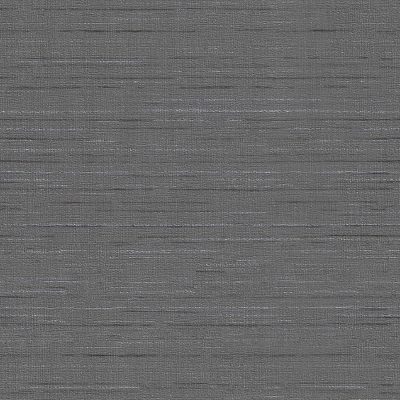
Look closely and the surface is a mix of charcoal and lighter grey fibres, not one dyed colour. That is what keeps a large grey floor from looking like painted concrete, and it is also why scuffs and dust disappear into the weave instead of sitting on top.
The pile is a tight loop, cut low. It does not flatten under a chair leg the way a long pile does, it does not shed, and a vacuum glides over it without pulling fibres. Underfoot it is firm with a little give from the backing pad. At 2 mm thick the tile still clears a standard door and a sliding closet track.
Under the single fluorescent tube of a basement, a flat grey floor turns into a smear of shadow. The heathered face keeps its grain in low light, so the floor still reads as carpet and not as a painted slab.
- Heathered loop pile, not a flat dyed colour
- Tight low loop: does not flatten, shed or snag
- 2 mm thick, clears a standard door
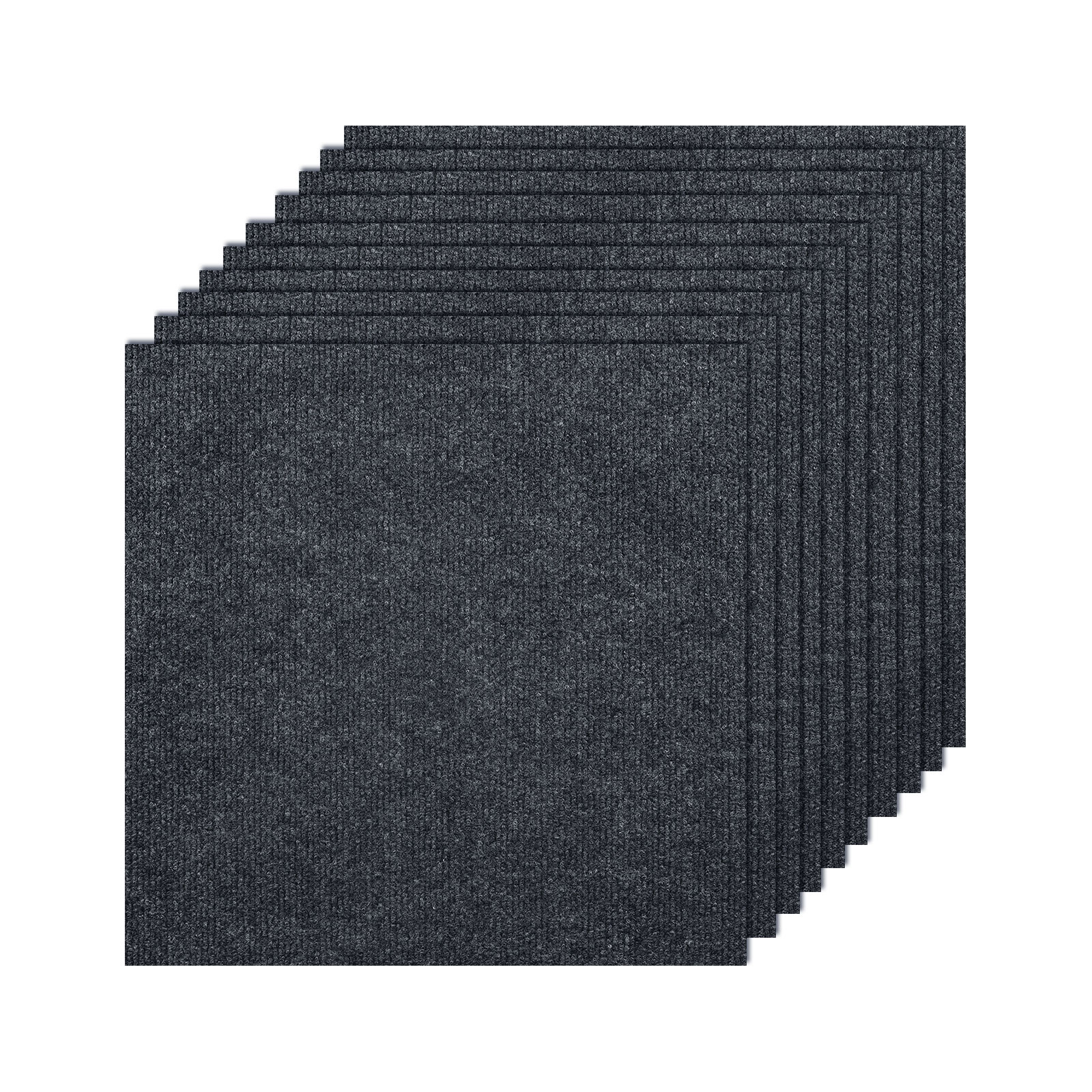
Ten Tiles, 38.75 sq ft
One box covers 38.75 sq ft. Nine tiles make a 5.9 x 5.9 ft square, and the tenth is your cut piece for the edges, which is the arrangement that uses the box most efficiently. Five tiles in a row makes a 9.84 x 3.94 ft strip for a corridor or the front of a workbench.
Each tile is 23.62 x 23.62 in., so the maths is simple: count the rows and columns of squares that fit your room, add 10 percent for cuts, and round up to the nearest box.
A 10 x 10 ft basement takes three boxes; a 20 x 20 ft garage takes ten, with the offcuts from the last row filling the strip in front of the door.
- 10 tiles per pack, 38.75 sq ft in total
- Nine tiles make a 5.9 x 5.9 ft square; the tenth is the cut piece
- 3.88 sq ft per tile, so count squares rather than square feet
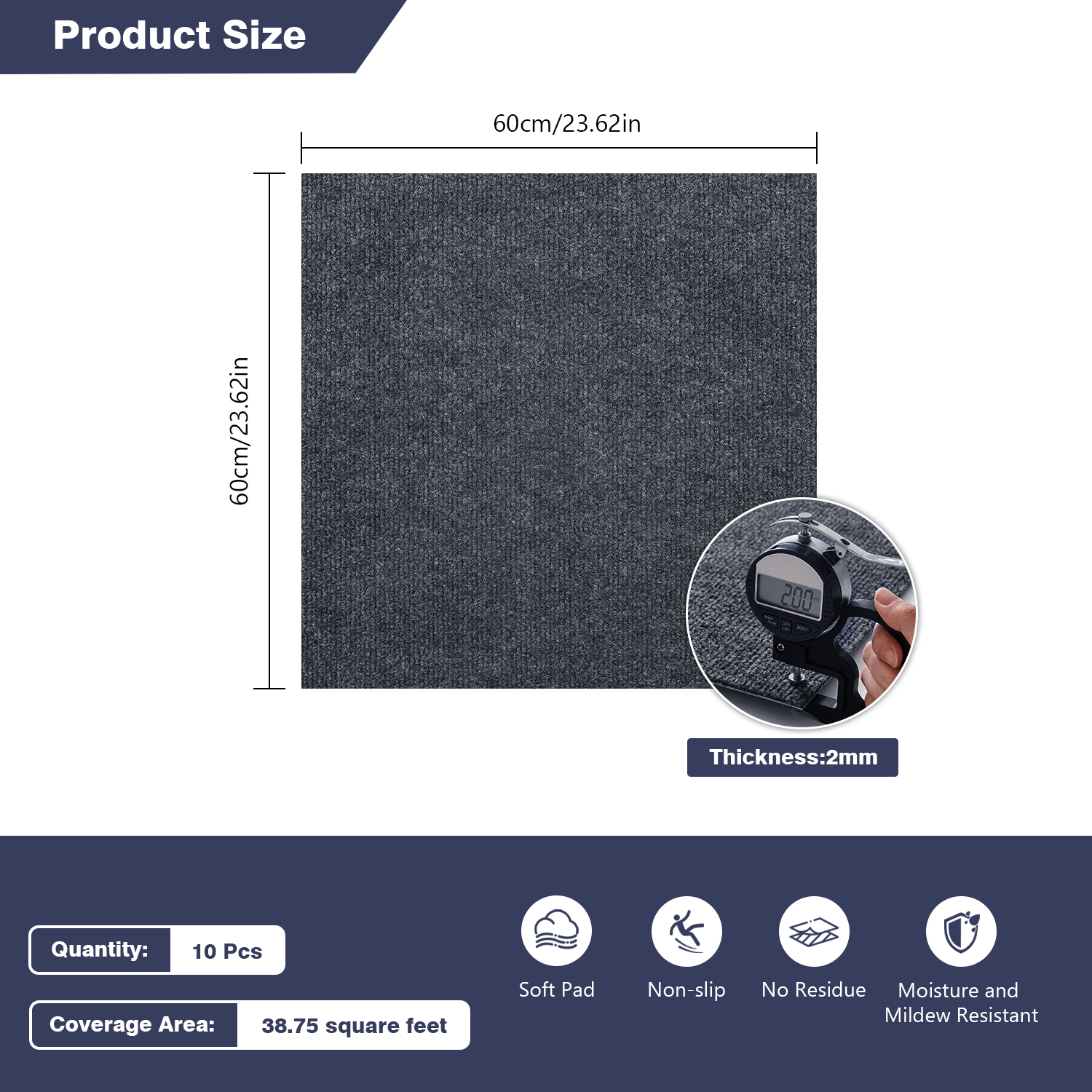
Cut It With What You Already Own
A utility knife and a straight edge are enough. Score the face, fold the tile back, and cut through the backing along the crease. Scissors work on short runs and around pipes. Nothing needs to be sent out or measured by a fitter.
That matters most at doorways and around posts, where a rigid plank floor would need a transition strip. A carpet tile just gets trimmed to the frame and pressed down.
Garage slabs have control joints every 10 to 12 ft. Cut the tile to stop 3 mm short of the joint and the slab can still move under it without lifting the seam.
- A utility knife and a straight edge are enough
- Score the face, fold the tile back, cut through the backing
- Scissors for short runs and around pipes
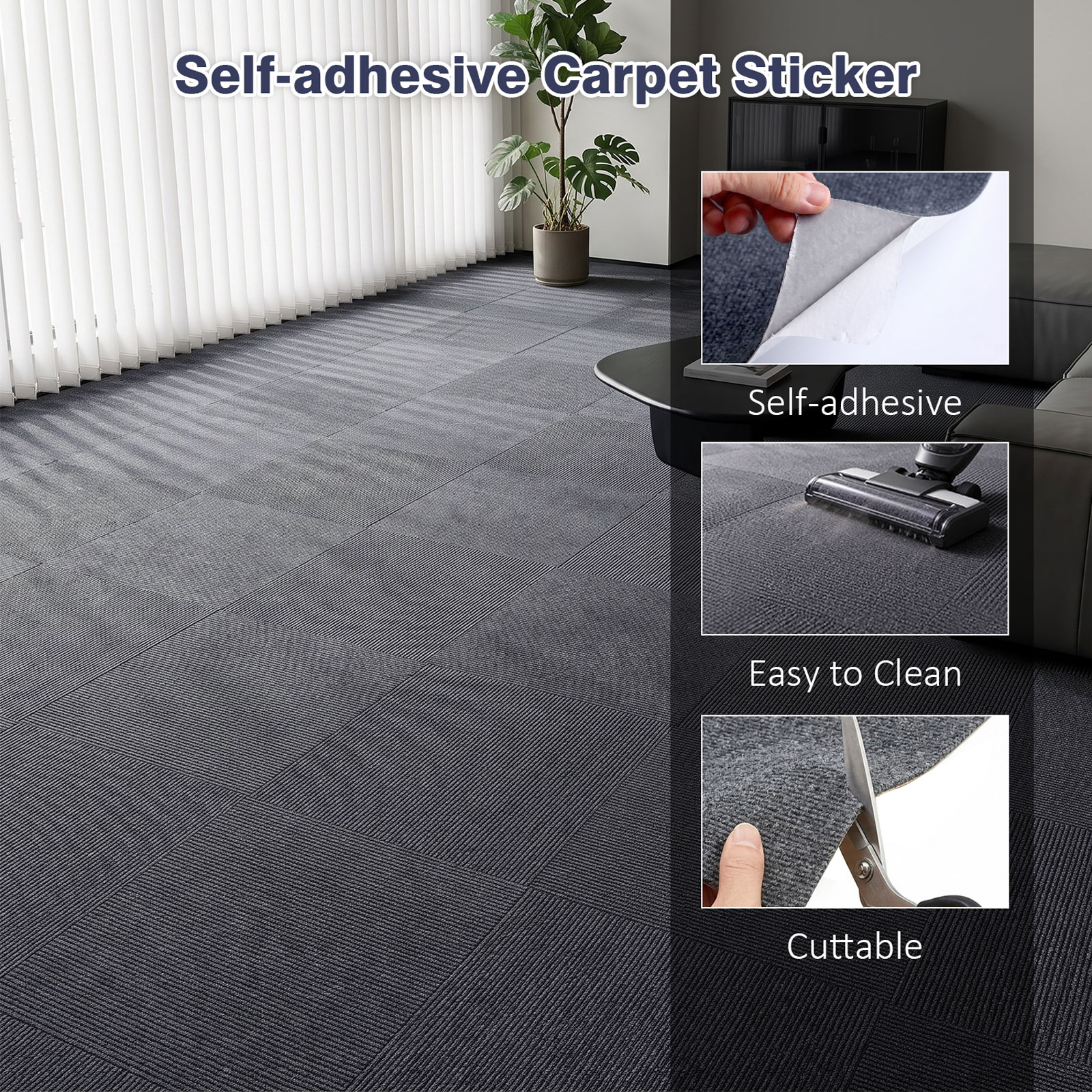
Peel, Press, Done
The backing is covered with a full sheet of adhesive under a peel-off liner, not four corner dots. Peel the liner, set the tile in place, and press from the centre out. The adhesive grabs on concrete, tile, vinyl, laminate and sealed hardwood.
For cleaning, vacuum as you would any low pile carpet. For a spill, blot with a cloth and a drop of mild soap. Grease and paint drips lift with a little more soap and a plastic scraper, because the loop pile does not hold them.
Oil and old paint have to come off first. A degreaser, a rinse and a full dry are the difference between tiles that stay down for years and tiles that lift in a week.
- Full adhesive sheet under a peel-off liner
- Grips concrete, tile, vinyl, laminate, sealed wood
- Vacuum weekly, blot spills, no steam cleaner
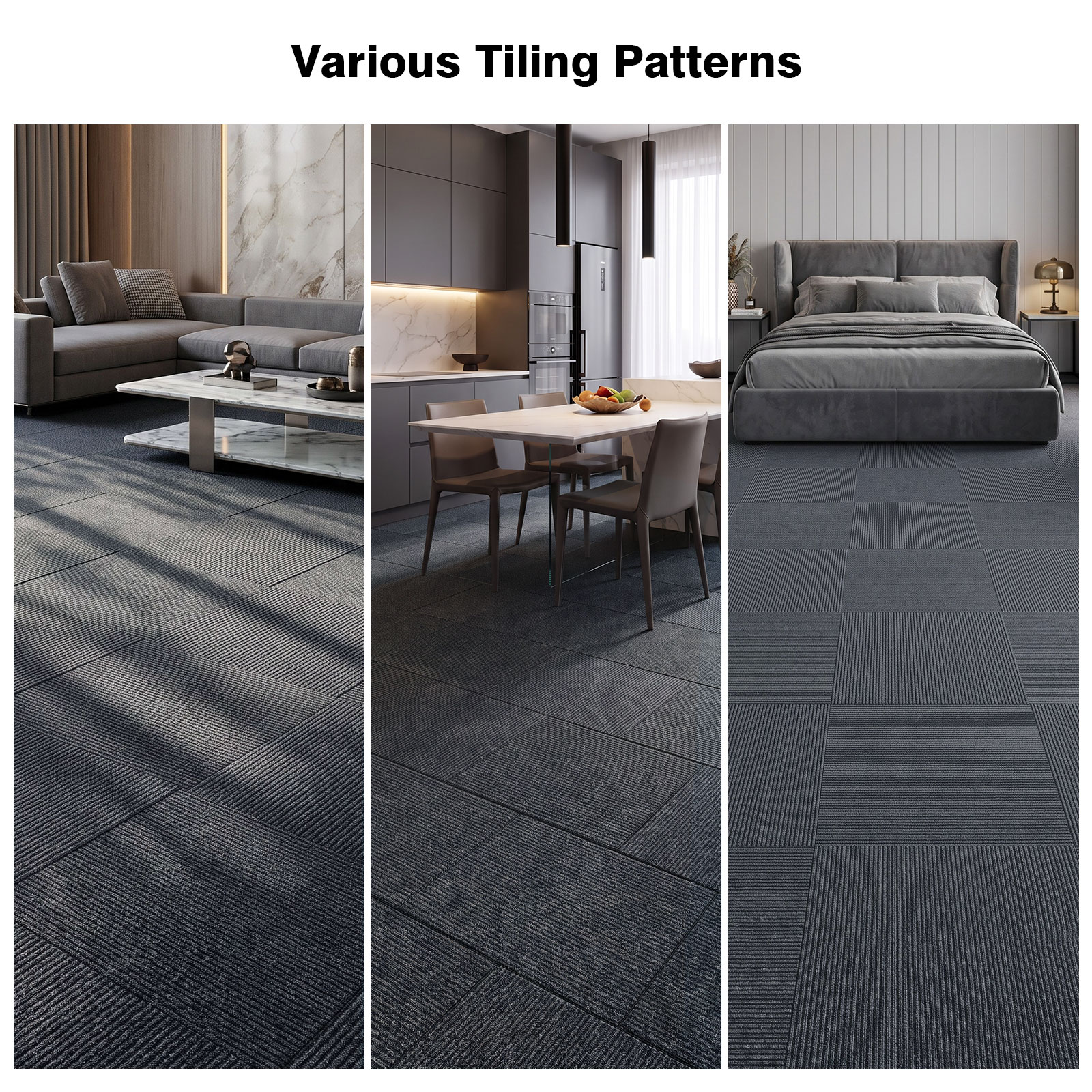
Lay It Straight, Offset, or Checkerboard
Because the tiles are square and identical, the pattern is your choice. Line them up for a clean grid. Stagger every other row by half a tile for a brick look that hides seams better in a large room. Or alternate two colours for a checkerboard.
In a basement, a straight grid running away from the stairs makes the room read longer. In a garage, an offset pattern hides the joins where the slab is not perfectly flat.
Run the grid away from the stairs, not across them. The long lines pull the eye to the far wall, and a low basement reads deeper than it is.
- Straight grid, half-tile offset or checkerboard
- Offset hides seams on an uneven slab
- Identical squares, so no extra cutting for a pattern
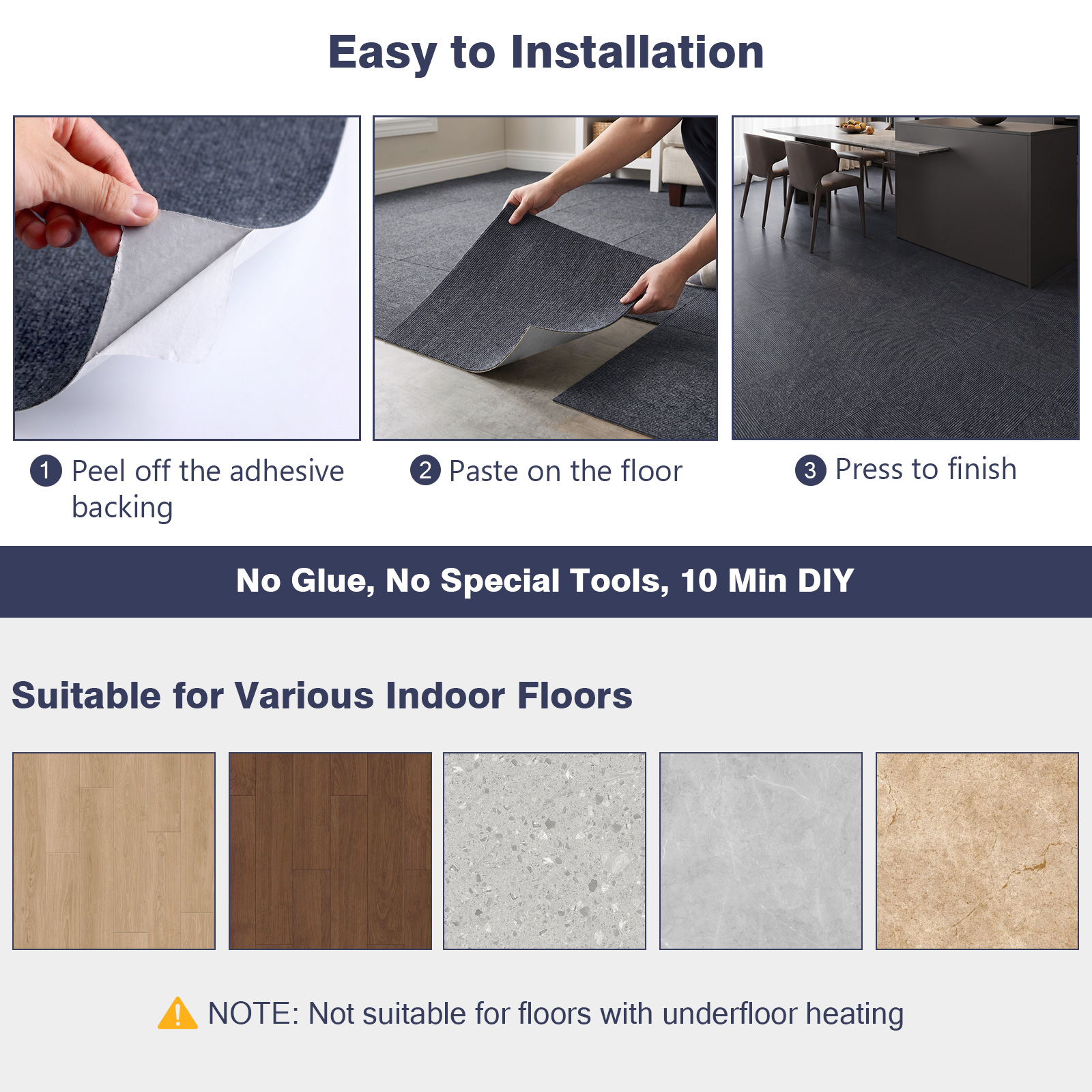
Three Steps, Ten Minutes
Sweep the floor, peel the liner, press the tile down. That is the whole method. Work from a chalk line or from the longest straight wall, keep the seams tight, and cut the last row to fit. A 10 x 10 ft area takes one person about an hour.
The floor needs to be clean, dry and structurally sound. Fresh concrete should cure for at least 30 days first. The tiles are not recommended over floors with underfloor heating, because the heat cycle works against the adhesive.
Start at the top of the stairs and work away from the door, so the last cut row lands under the shelving where nobody looks.
- Sweep, peel, press: no glue and no special tools
- The floor must be clean, dry and sound; new concrete cures 30 days
- Not recommended over floors with underfloor heating
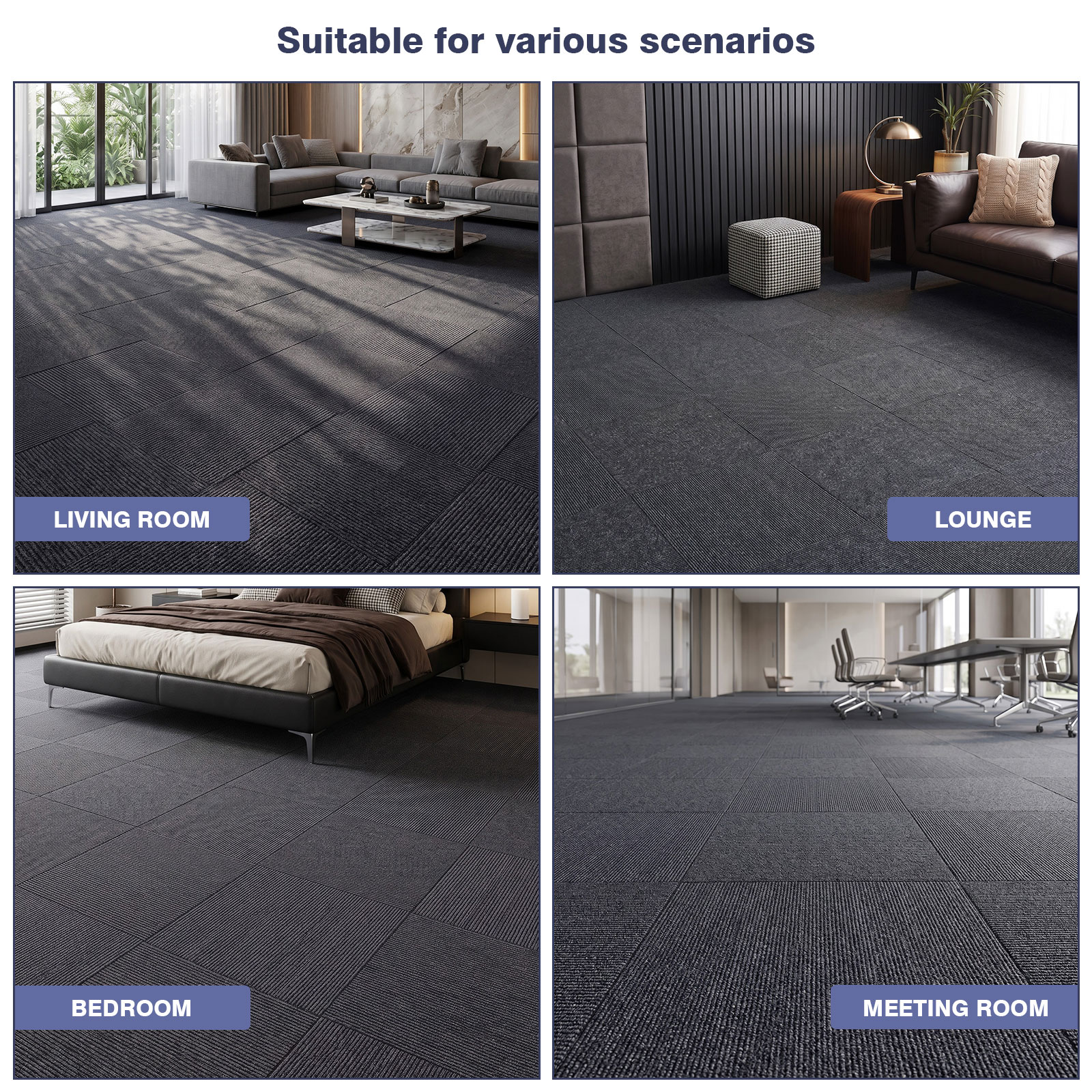
Rooms That Never Got Finished
This is the tile for the rooms that were left as concrete: the basement, the garage, the mudroom, the utility corner, the back of a shop. Places where a permanent carpet would be a mistake but a bare slab is worse.
It is also the fastest fix for a rental with a damaged floor, because the tiles lift again at the end of the lease and leave the original surface behind.
The same tile suits a laundry corner, a workshop bench run and the strip in front of a chest freezer, where a bare slab gets cold and damp underfoot.
- Basement, garage, mudroom, utility corner
- Rental floors that must come up at lease end
- Any room left as bare concrete
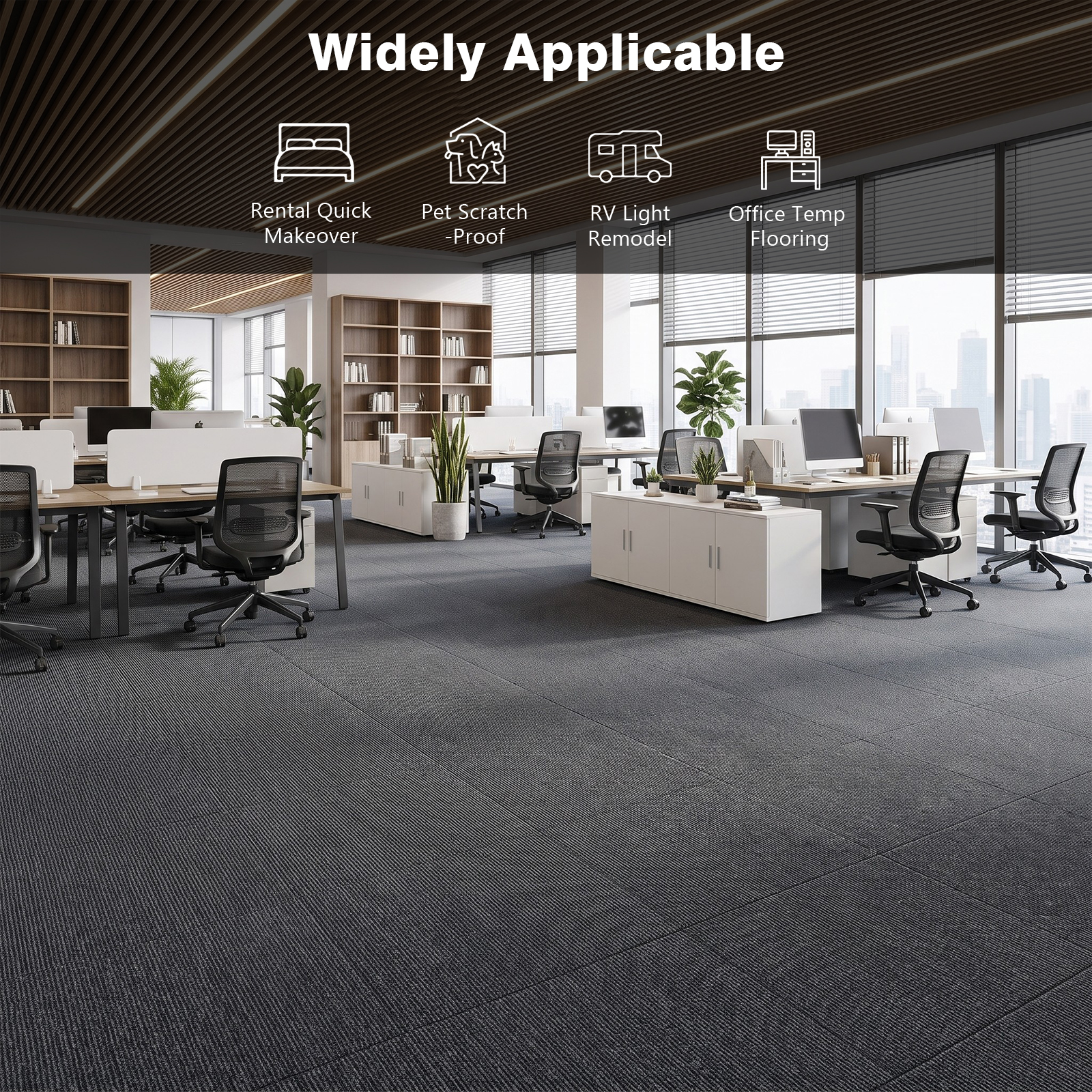
Rentals, RVs, Offices, Pet Rooms
Landlords use them between tenants because a stained square can be swapped without re-carpeting the room. RV owners use them because they cut around wheel wells and seat rails. Offices use them because a worn path down the middle can be replaced tile by tile.
For pets, the tight loop resists claw snags, and an accident is a blot and a rinse rather than a soaked pad. Keep two spare tiles in the box; a decade from now they will still match.
In an RV or a van conversion the tiles cut around wheel arches and seat rails, and a damaged square comes up without touching the rest of the floor.
- Replace one square instead of the whole floor
- Cut around wheel arches, rails and posts
- Keep two spares; dye lots shift over years
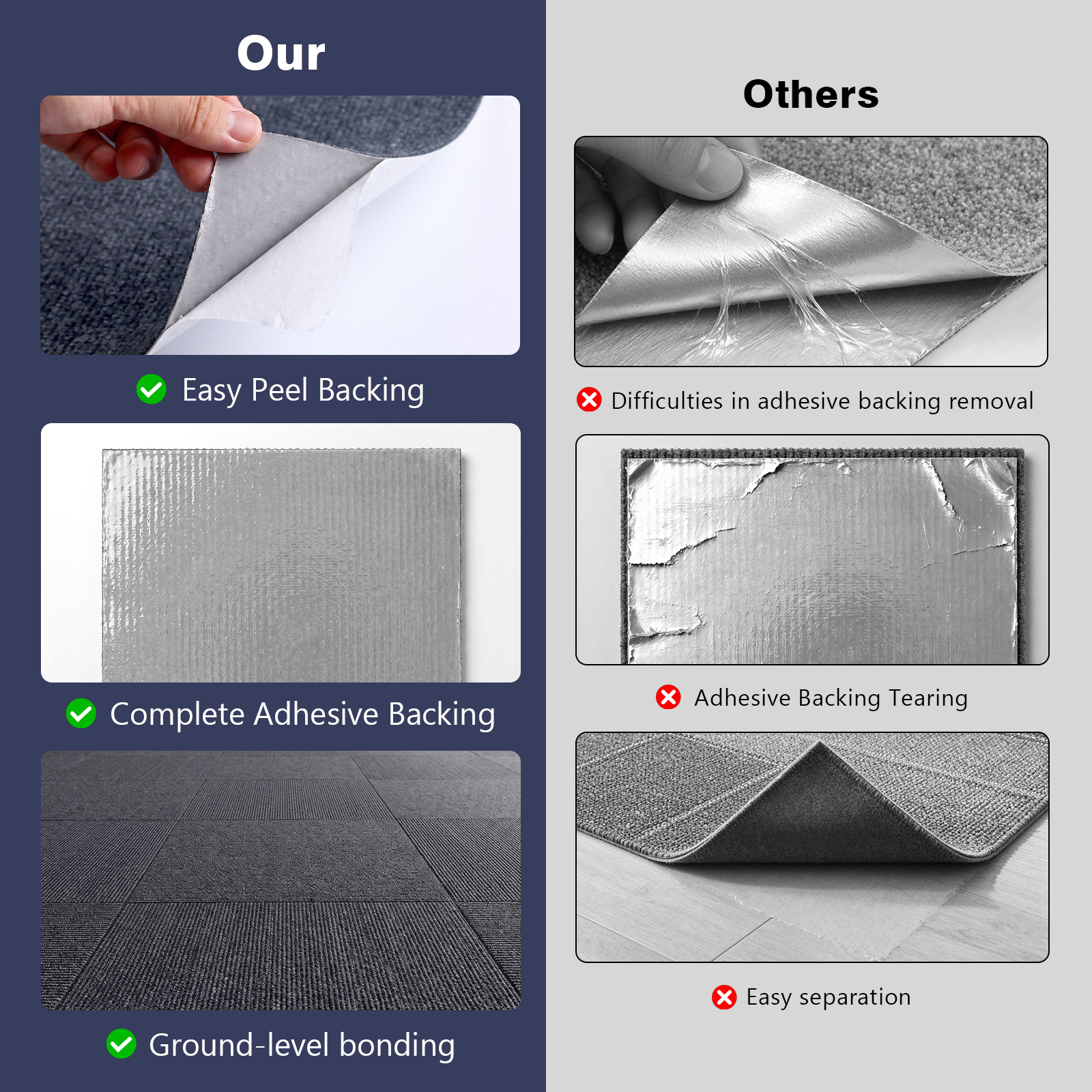
A Full Backing, Not Four Dots
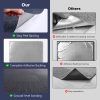
Cheap carpet squares are held by a skim of adhesive or a few glue dots, which is why they lift at the corners and tear when you pull them up. These have a continuous adhesive sheet across the whole back, so the tile bonds at ground level across its full face.
That is also why they come up in one piece when you want them to: the liner-backed adhesive releases from a sealed floor without leaving a sticky residue, and the tile stays intact instead of splitting.
When the box is empty, keep the liner. It is the cleanest way to store two spare tiles flat until a replacement is needed.
- Continuous adhesive sheet, not four glue dots
- Bonds at ground level across the full face
- Lifts in one piece, no sticky residue on a sealed floor
Product Specifications
- SKU: JDS-01-GY-10
- Tile Size: 23.62 x 23.62 in. (60 x 60 cm)
- Quantity: 10 tiles per pack
- Coverage: 38.75 sq ft (3.6 m²)
- Colour: Dark Grey
- Material: Low loop pile carpet face with self-adhesive backing
- Feature: Peel and stick, non-slip, cuttable, moisture and mildew resistant
- Package Includes: 10 self-adhesive carpet tiles
- Pile: Low loop pile, tight and dense
- Thickness: 2 mm (0.08 in.)
- Backing: Full self-adhesive sheet, peel-off liner
- Installation: No glue, no tools, peel and press
- Net Weight: 5.29 lb (2.4 kg) per pack
- Care: Vacuum, spot clean with mild soap, do not steam
- Not suitable for: Floors with underfloor heating
- Best for: Basement, garage, bedroom, office, rental, RV
If you need a different colour or a larger pack, feel free to contact us.
Frequently Asked Questions
Do these carpet tiles need glue or a underlay?
No. Each tile has a full sheet of self-adhesive backing under a peel-off liner. You press them straight onto a clean, dry floor. No glue, no tack strip, no underlay, no tools beyond a knife for the edges.
What surfaces will they stick to?
Concrete, ceramic tile, vinyl, laminate and sealed hardwood. The floor must be clean, dry and flat. Fresh concrete needs at least 30 days to cure, and damp slabs should be sealed first.
Can I cut them to fit around doors and corners?
Yes. Score the face with a utility knife, fold the tile back and cut through the backing along the crease. Scissors work for short cuts. Cut with the tile face up so the blade does not fray the pile.
How many boxes do I need?
One box is 38.75 sq ft, or ten 23.62 in. squares. Measure the room, divide by 3.88 sq ft per tile, add about 10 percent for cuts, then round up. A 10 x 10 ft room needs three boxes.
Can they be removed without damaging the floor?
Yes, on a sealed floor. Lift a corner and peel the tile back slowly; the adhesive releases and the tile stays in one piece. On unsealed concrete or old vinyl, test one tile in a corner first.
Can I use them over underfloor heating?
No. The manufacturer does not recommend these tiles over floors with underfloor heating. The heat cycle softens the adhesive and the tile can lift at the seams.
How do I clean them?
Vacuum weekly with a stick or canister vacuum. For spills, blot with a cloth and a drop of mild soap, then rinse with a damp cloth and let it dry. Do not soak the seams or use a steam cleaner.

Reviews
There are no reviews yet.