 Jeedeson Official Website
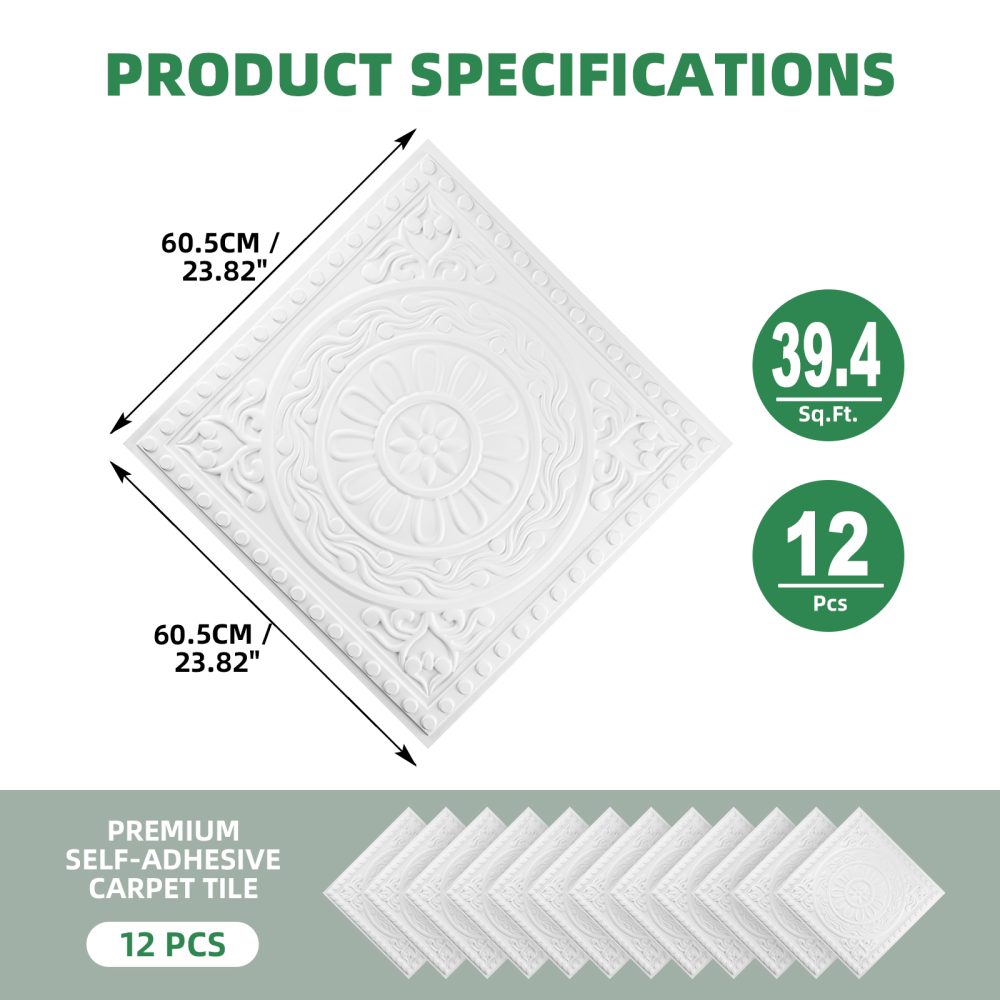
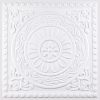
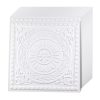
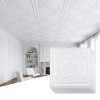

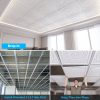

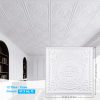

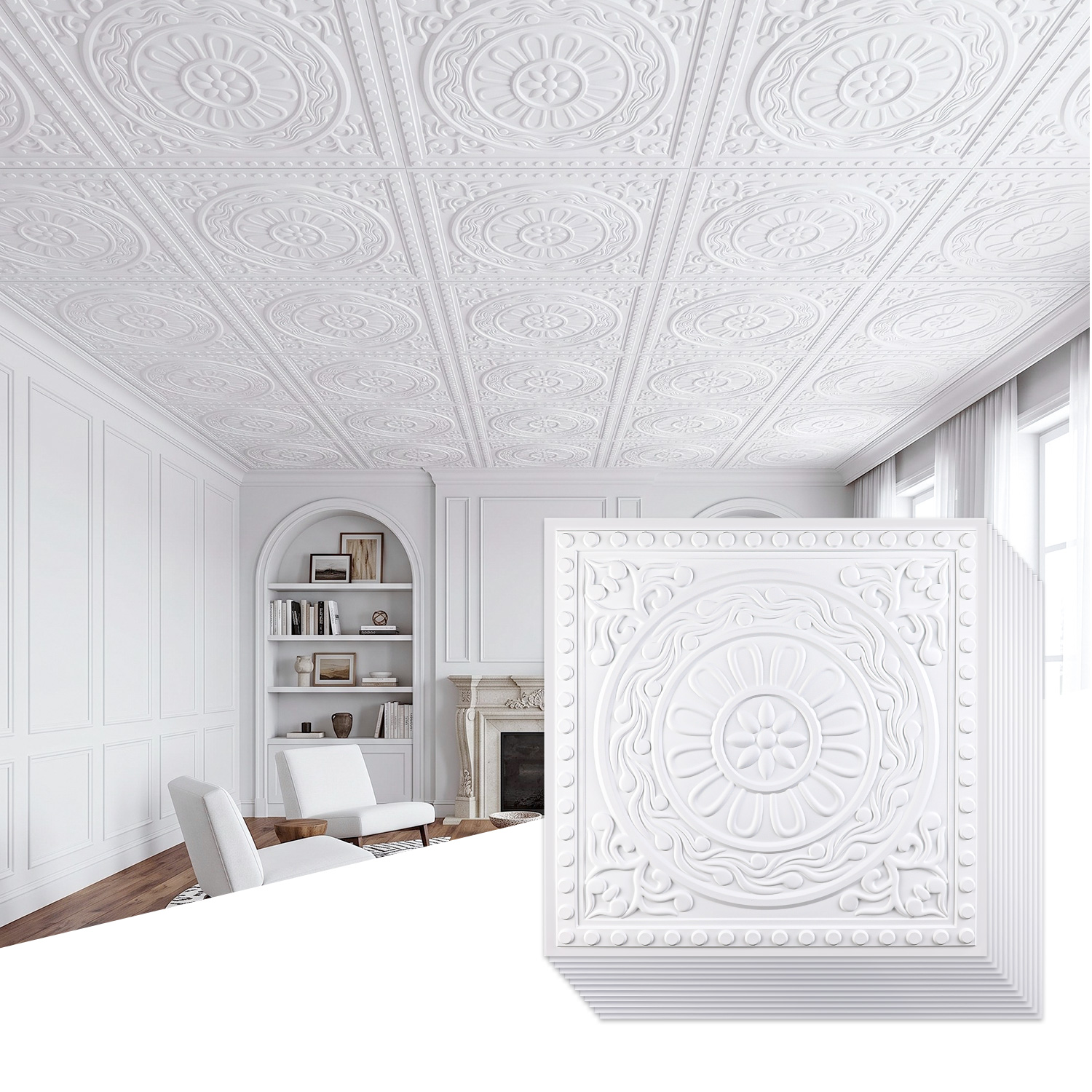
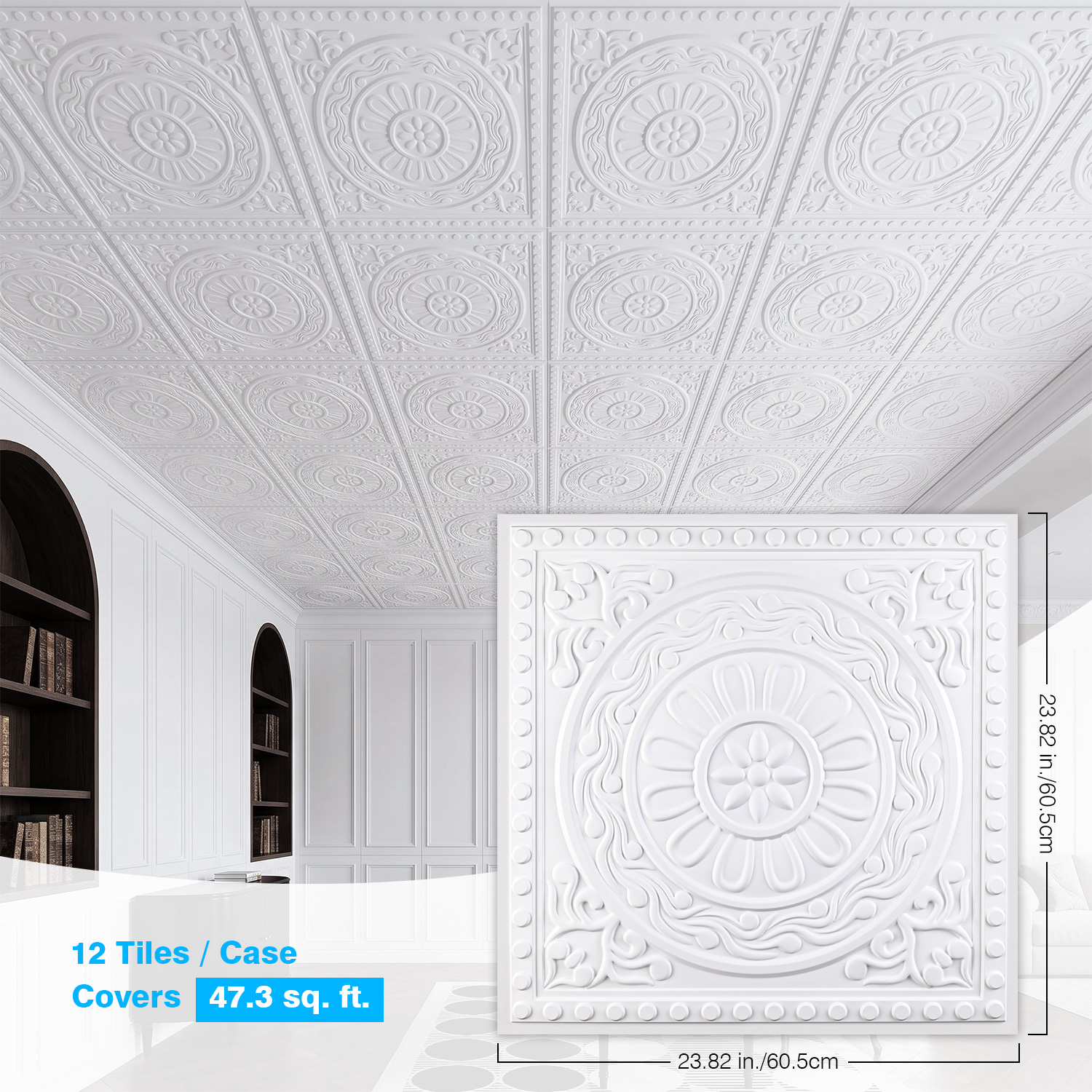
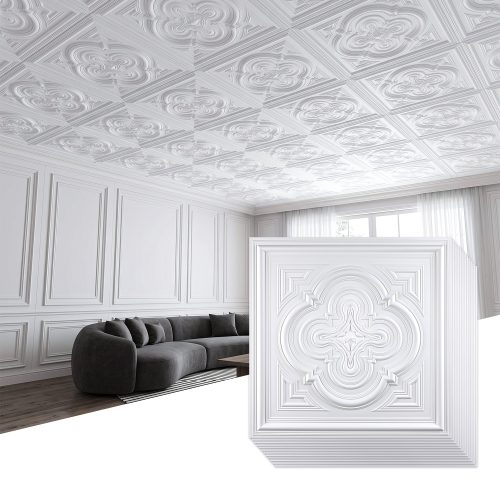
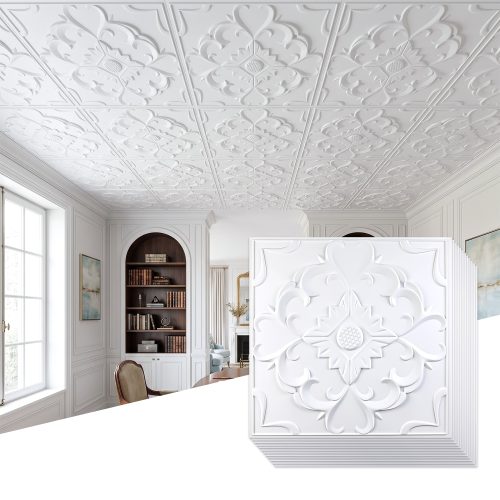
Most ceiling tiles break a pattern across four panels. This one does not: every 23.62 in. square is a finished medallion, a round rosette in 12 mm relief inside a scrolled border, so a ceiling reads as a row of complete circles instead of a lattice of quarter motifs. Twelve tiles per case, 47.28 sq ft, matte white PVC, drop-in or glued.
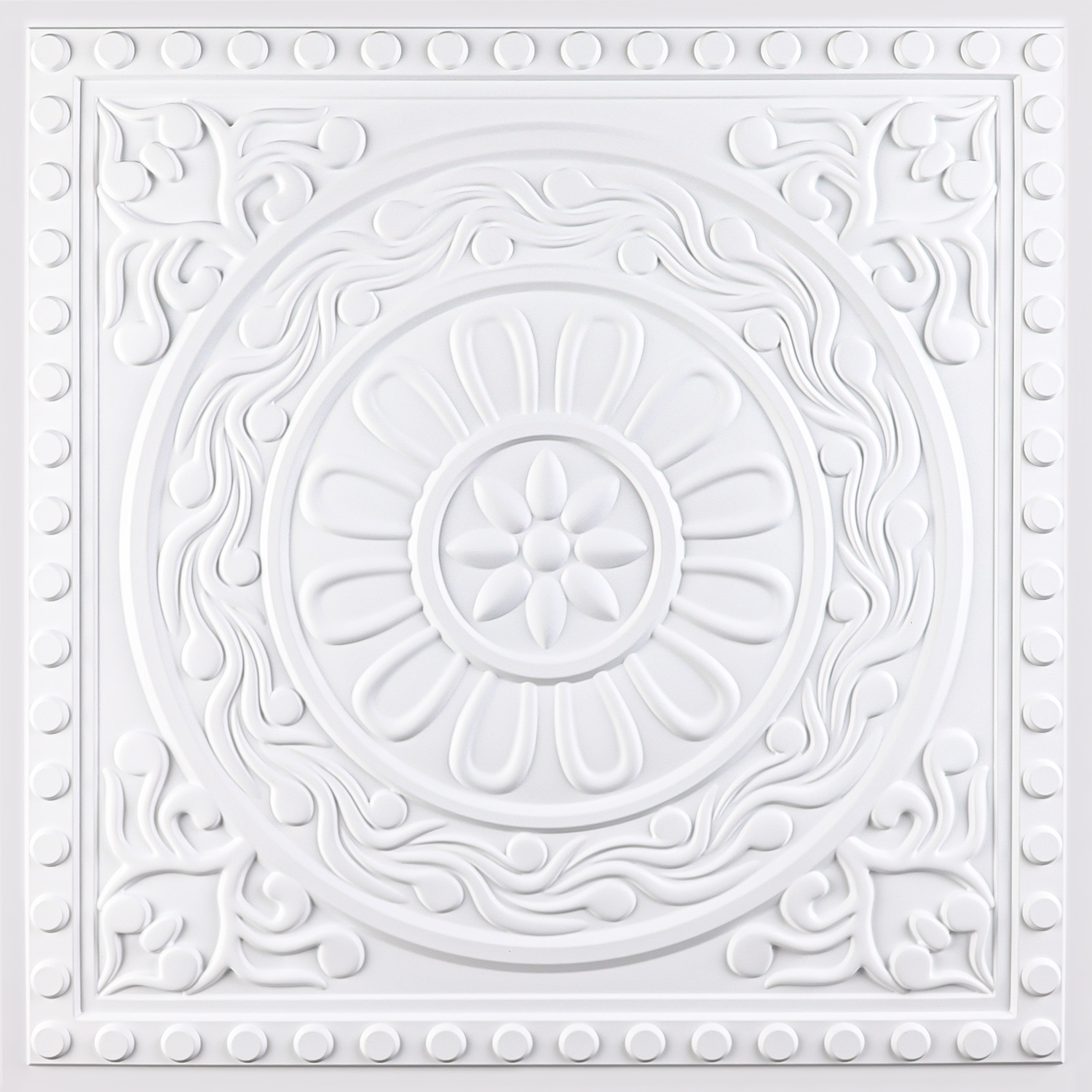
A Medallion at the Centre of Every Tile
The rosette is a radial bloom with a beaded centre, framed by a scroll border that runs to the edge of the panel. Because the border is continuous, adjacent tiles read as separate medallions in a frame rather than one interrupted pattern, which is closer to how a plaster ceiling was originally set out in bays.
That makes layout forgiving. A stepped or quartered pattern punishes a rotated tile; here the worst case is a border that runs the wrong way, and even then the ceiling still reads as a regular grid of rosettes.
- One complete medallion per tile, no cross-tile alignment
- Scroll border frames each panel
- Forgiving layout, suited to a first ceiling project
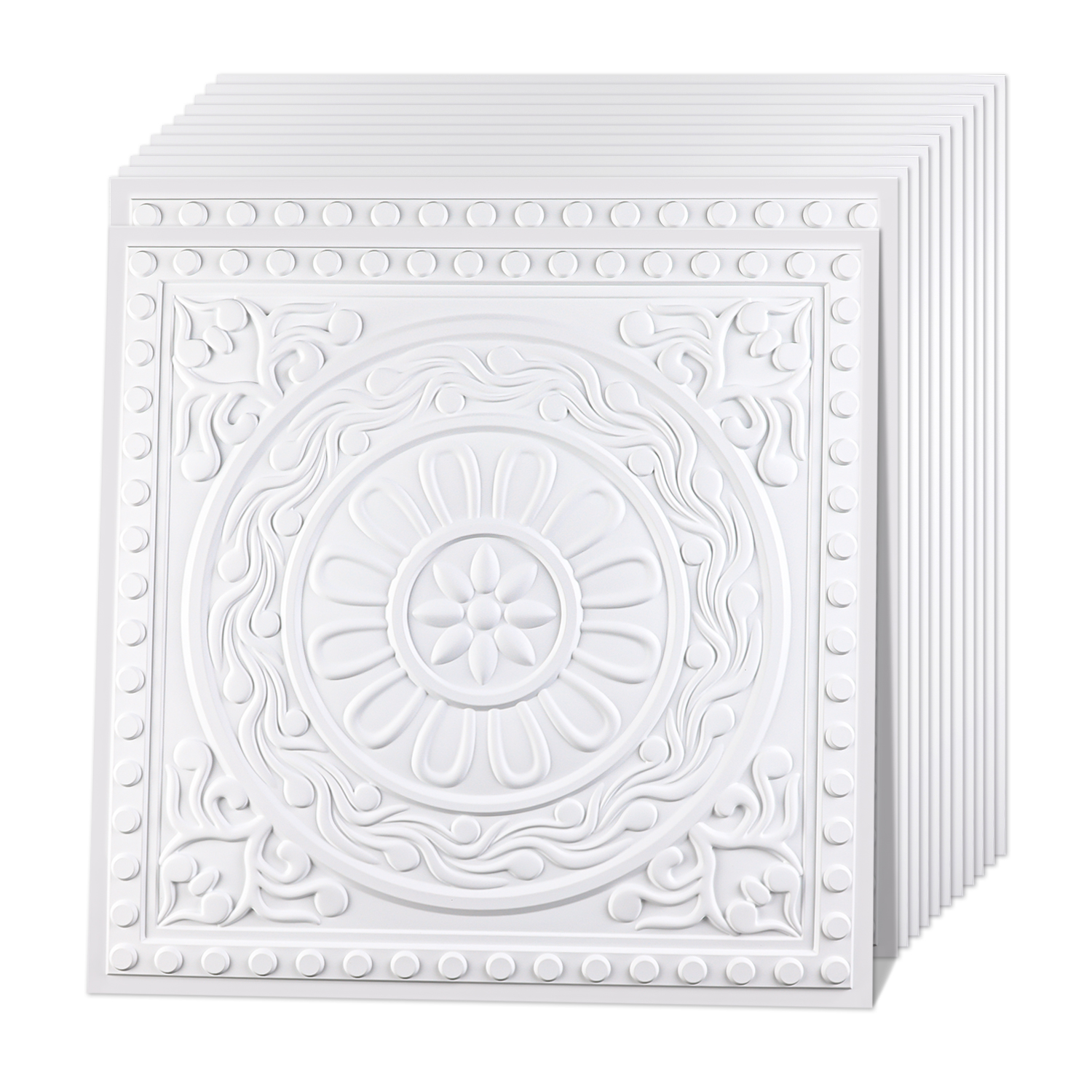
Twelve Panels, 47.28 sq ft
A case is twelve tiles at 3.94 sq ft each, which is 47.28 sq ft of face. On a grid ceiling, count the panels you are replacing and add one case for cuts and damage. On a solid ceiling, measure length by width, divide by 3.94 and round up, then add 10 percent.
For a typical 10 x 12 ft bedroom that works out at three cases; the leftover tiles are the perimeter cuts, and any spares go in the loft against a future repair.
- 12 tiles per case, 47.28 sq ft total
- 3.94 sq ft per tile, easy to divide a room by
- Add 10 percent for the cut row
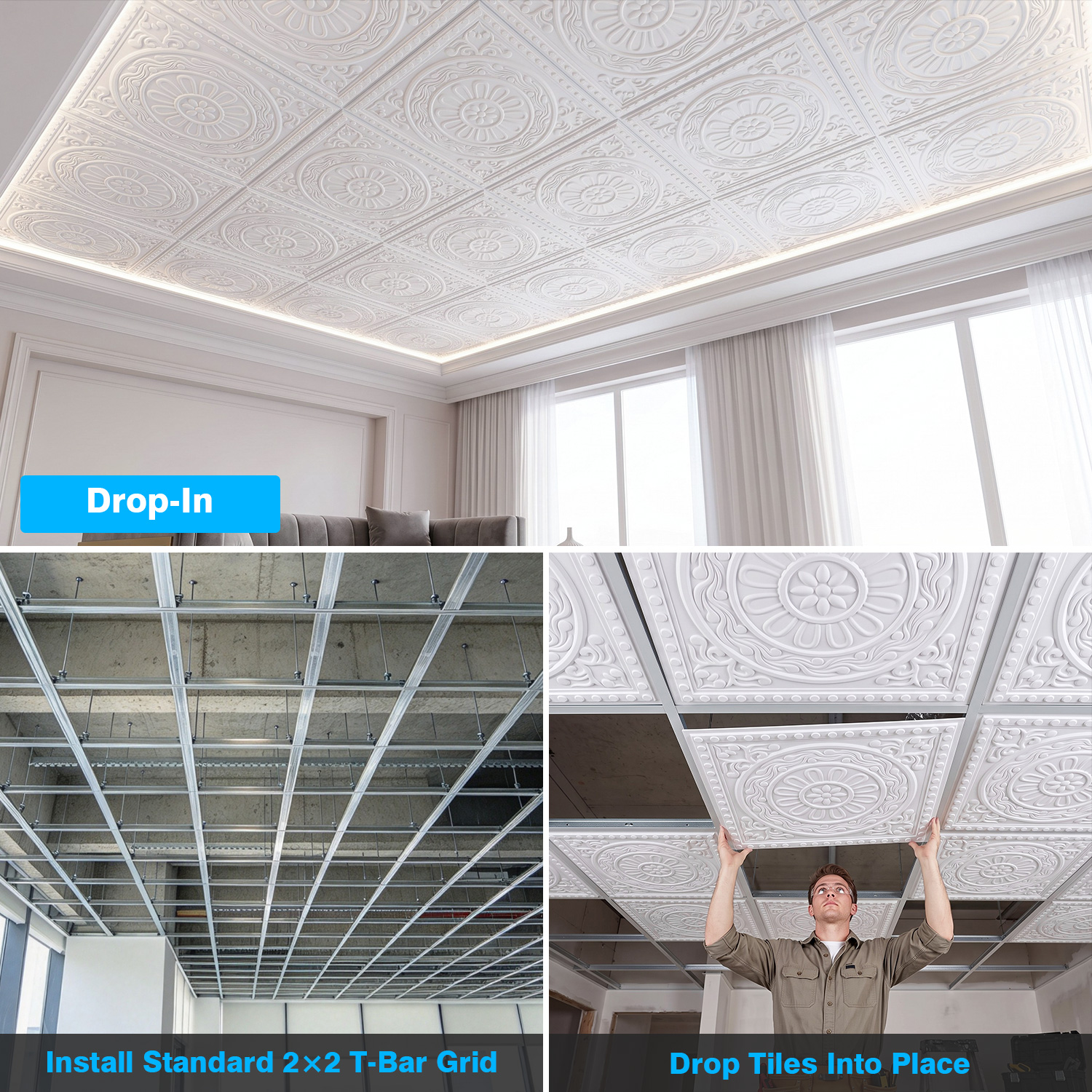
Grid Installation: 2 x 2 ft Modules
In an existing suspended ceiling the tiles lay straight in. The 23.62 in. face overlaps the flange of a 15/16 in. T-bar on all four sides, so the tile sits flat with no clips and lifts out again when you need to reach above.
Set the medallions so the scroll border runs the same way on every tile. It is a small thing, but a border that turns 90 degrees halfway across a room is the one defect anyone will notice from the doorway.
- Fits 2 x 2 ft openings in a 15/16 in. exposed grid
- No clips, no screws, lifts out for service access
- Orient every border the same way
Adhesive Installation on Existing Drywall
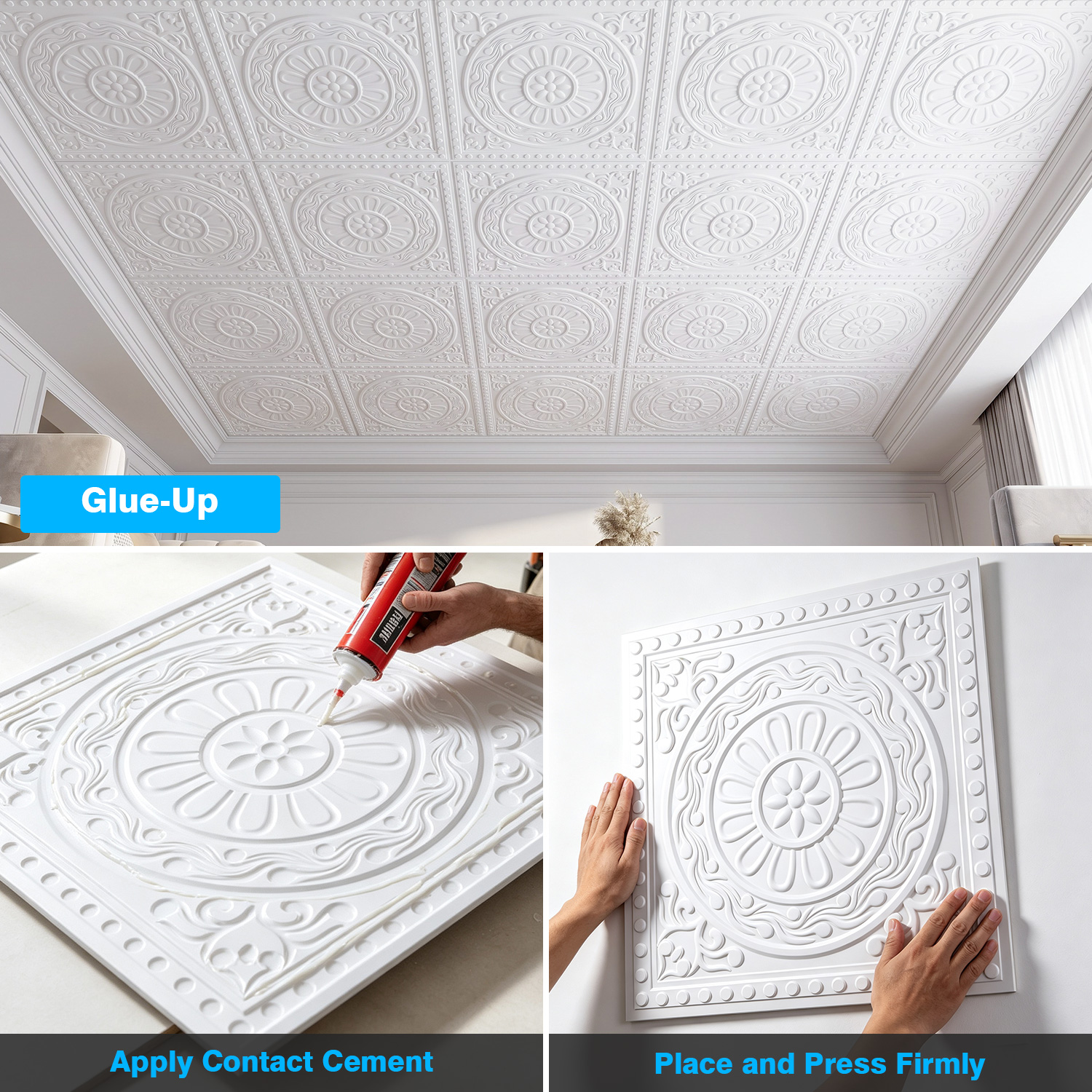
On a solid ceiling these go up with contact cement. Coat the back and the ceiling, wait until both are tacky to the touch, then press and hold. Because the bond is immediate, lay the first row out dry, check the borders line up and the row is parallel to the wall, and only then glue.
The panel is light enough, 13.23 lb for a whole case, that it stays flat while the adhesive cures. Work from the centre of the room outward if the walls are out of square; that way the cut tiles at the perimeter absorb the error instead of the pattern.
- Contact cement, no grid required
- Lay the first row dry before gluing
- Start in the centre when the room is out of square
Why the Rosette Reads Well From Below
A ceiling is seen at an angle and in silhouette, so it is shadow, not detail, that carries the pattern. The 12 mm relief on this tile throws a soft ring of shadow inside the scroll border, which is enough to make the medallion visible from the far side of the room without turning the ceiling into a heavy moulded slab.
It also photographs well, which matters if you are listing a property. A flat white ceiling disappears in a wide shot; a rosette grid gives the camera something to resolve.
- 12 mm relief throws a readable shadow ring
- Visible from across the room without a boxed frame
- Reads as detail in photos, not as a flat white plane
Ceilings, Soffits and Feature Walls
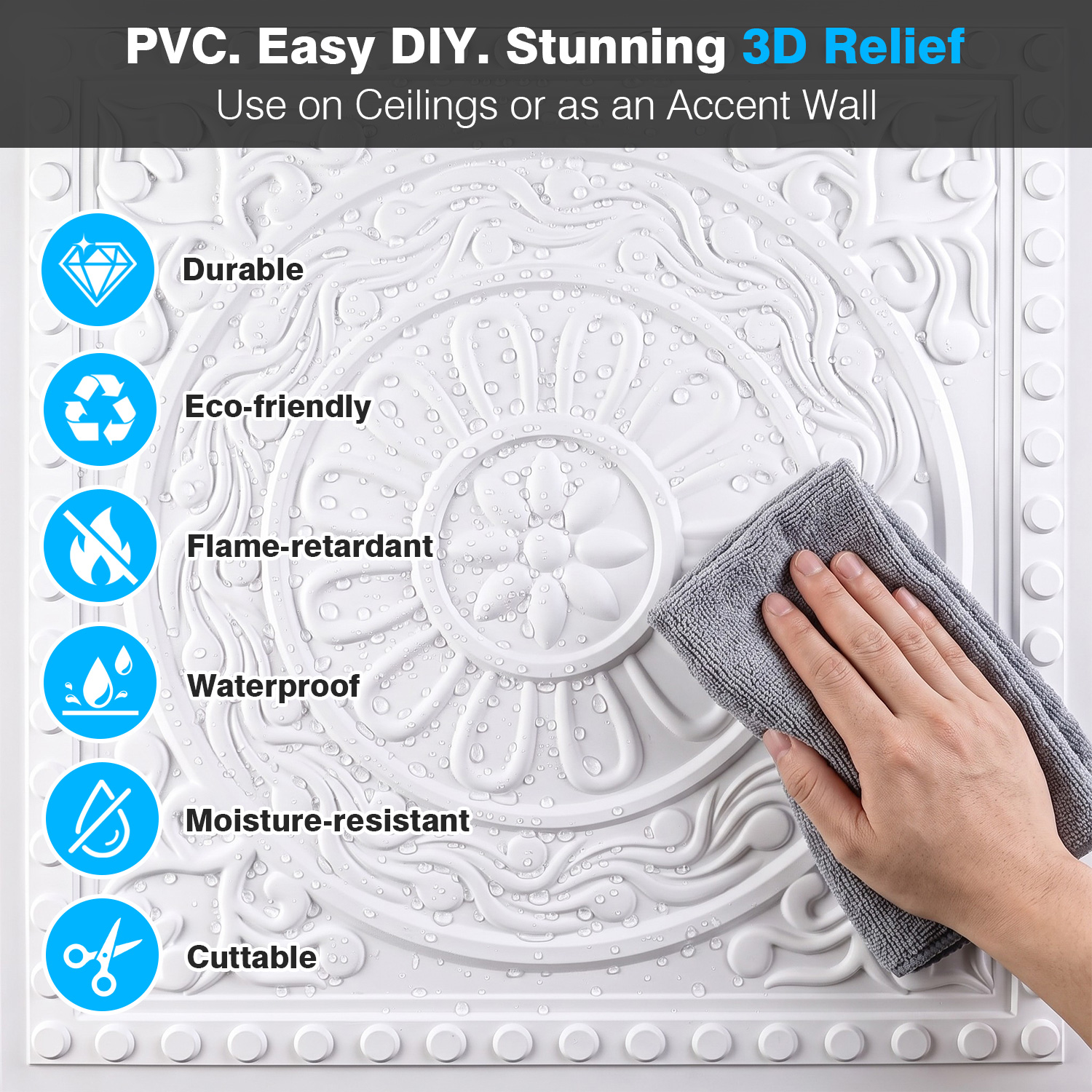
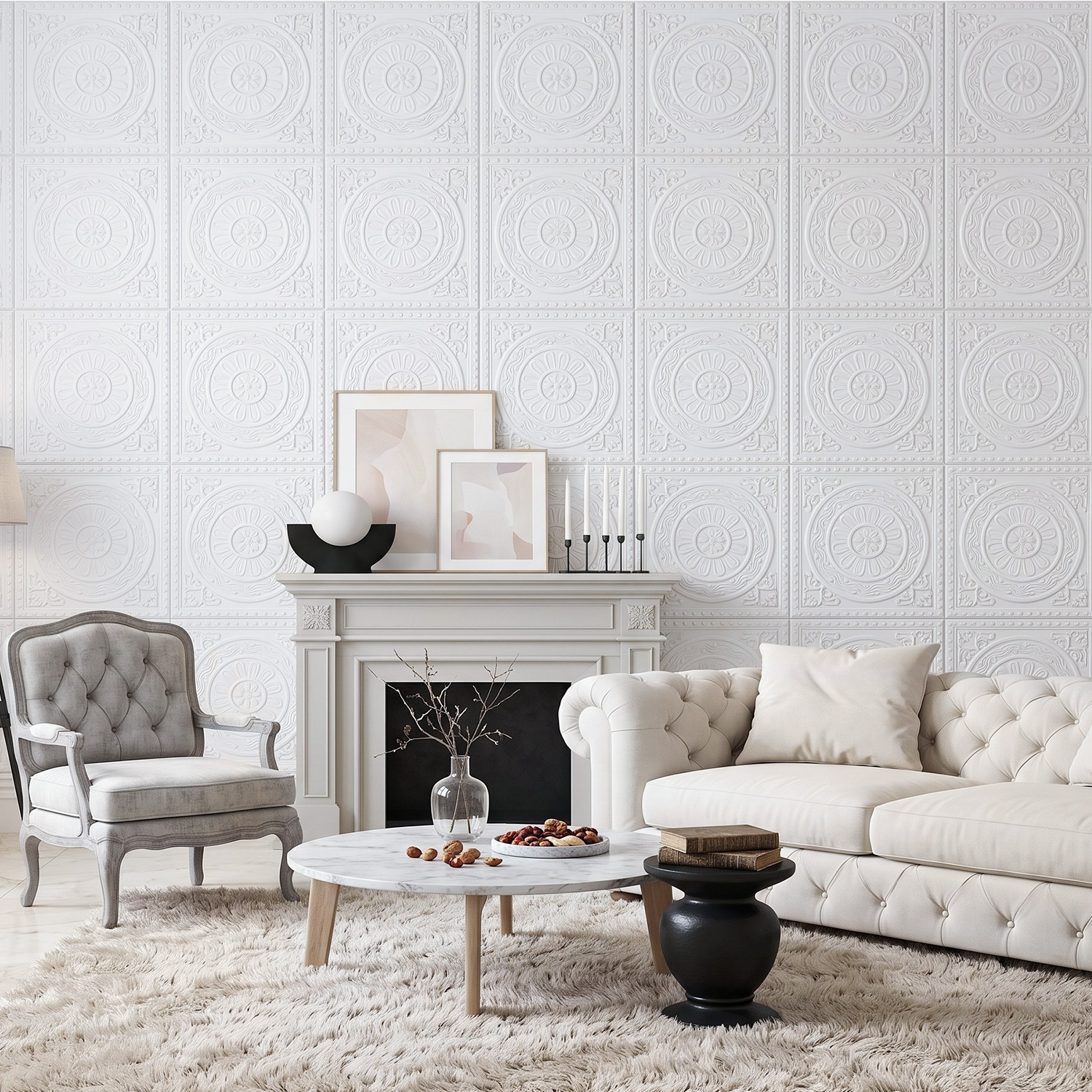
The obvious use is a ceiling, but the panel also works vertically: a soffit above kitchen cabinets, a laundry niche, the wall behind a bar, a fireplace breast. PVC wipes clean, so a kitchen backsplash-height run is practical as well as decorative.
Keep it indoors. It is a finished interior panel, not cladding, and it should not be used on an exterior ceiling or anywhere it takes direct water.
- Ceilings, soffits, alcoves and feature walls
- Wipes clean, so it suits kitchen and utility areas
- Indoor use only, no direct water contact
Working Around Fixtures
Score the face with a utility knife and snap the tile, the same way you would cut drywall. For a recessed light, cut from the back: mark the circle on the reverse, cut slightly inside the line, and the trim ring covers the edge.
Cut the opening a couple of millimetres small and ease it with the blade rather than cutting wide. A gap around a fixture is the one place a white ceiling shows a hard black line.
- Score and snap, no saw needed
- Cut recessed light openings from the back
- Keep openings 1 to 2 mm tight so the trim covers the cut
Before You Order: Grid, Border, Spares
Measure the grid first: 2 x 2 ft openings in a 15/16 in. T-bar is what these are made for. If the room has no grid and no appetite for one, confirm the ceiling is sound enough to glue to, because contact cement will not hold flaking paint.
Then count the border. A room almost never divides into whole tiles, and the cut row looks best at the wall. Two spare tiles cost little and cover the day a pipe leaks above the ceiling.
- Confirm 2 x 2 ft grid spacing
- Plan the cut row against the wall
- Keep two spares
Product Specifications
- SKU: JDS23-CT230
- Tile Size: 23.62 x 23.62 in. (60 x 60 cm)
- Relief Depth: 12 mm (0.47 in.)
- Quantity: 12 tiles per case
- Coverage: 47.28 sq ft (4.39 mm²)
- Colour: Matte White
- Material: PVC
- Installation: Lay-in 15/16 in. T-bar grid or glue-up
- Edge: Square edge
- Feature: Round rosette medallion, waterproof, cuttable
- Package Includes: 12 ceiling tiles
- Net Weight: 13.23 lb (6 kg) per case
- Care: Damp cloth and mild soap
- Not suitable for: Outdoor use and direct water contact
If you need a different pattern or a larger quantity, feel free to contact us.
Frequently Asked Questions
Is each tile a complete design or part of one?
Complete. Every 2 x 2 ft panel has its own round rosette inside a scroll border, so you do not have to align quarters across four tiles. That is what makes this the easier pattern to lay for a first ceiling project.
What is the difference between 12 mm and 20 mm relief?
Depth changes how much shadow the pattern throws. Twelve millimetres reads clearly in a normal room and stays easy to dust; twenty millimetres is a deeper, more formal moulding that suits a taller room. For a ceiling under 8 ft, 12 mm is usually the better choice.
Can these replace the panels in my basement ceiling?
Yes, if the grid is 2 x 2 ft with 15/16 in. tees. Lift the old panel out, drop this one in, and it sits on the flange on all four sides. It also lifts out again, so you keep access to the joists and wiring.
Do I need a grid if the ceiling is drywall?
No. Contact cement on both faces holds the panel directly to drywall or plaster. The ceiling needs to be clean, dry and sound, and any flaking paint should come off first, because the adhesive bonds to the paint.
How much coverage is in one case?
47.28 sq ft: twelve tiles at 3.94 sq ft. For a solid ceiling, length times width divided by 3.94, plus 10 percent, rounded up. For a grid, just count the panels.
Are they heavy enough to need two people?
No. A full case is 13.23 lb, and a single panel can be set with one hand. Two people still help on a glue-up, because one can hold the tile while the other checks the line.
Can they be used in a bathroom or kitchen?
Yes. PVC does not absorb water, does not rust and wipes clean with a damp cloth, so bathroom and kitchen ceilings are fine. Keep them away from direct shower spray and give the room ventilation.
Questions About This Ceiling Tile?
Tell us the room size, the ceiling height and whether you already have a grid, and we will tell you how many cases you need before you buy.
Reviews
There are no reviews yet.