 Jeedeson Official Website
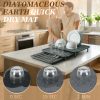

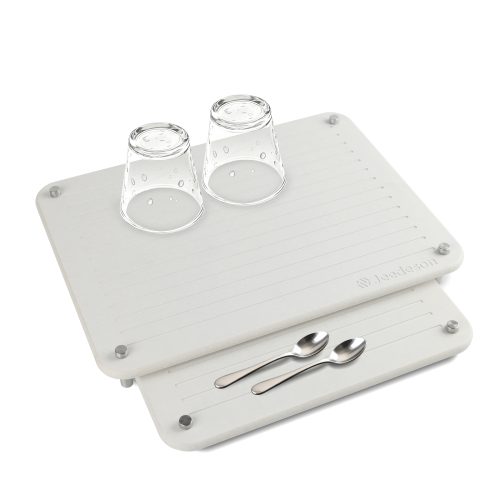
Expandable Stone Drying Mat — one 9 mm slab that opens into a two-tier drying rack
Flat against the wall when you are done, two levels of stone when the dishes are wet. Built for counters 12 inches deep.

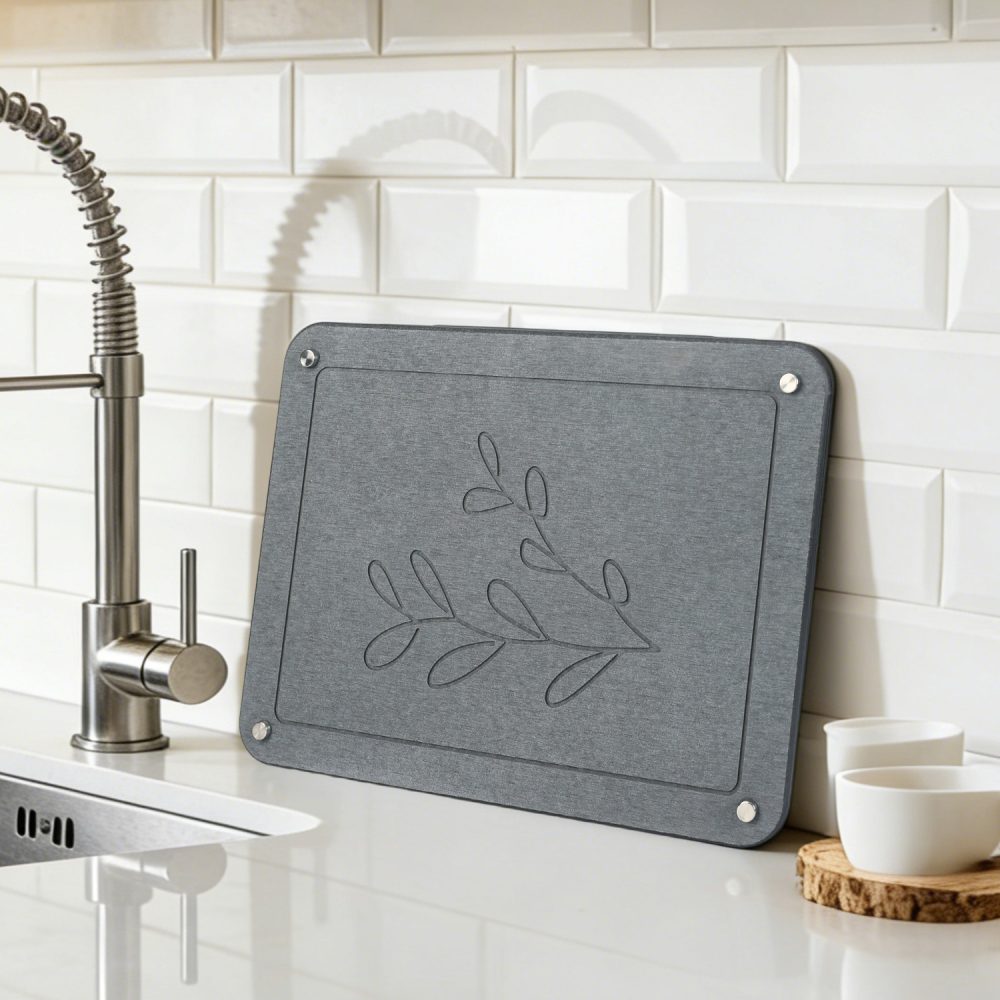
Closed and standing against the splashback, engraved leaf motif facing out
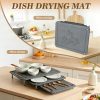
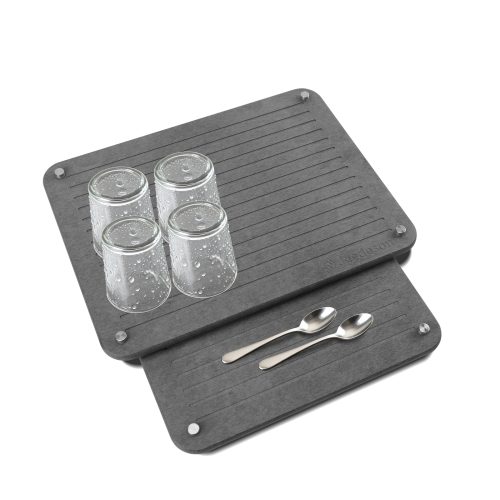
This is the drying stone for a kitchen that does not have room for a dish rack. Closed, it is a slim 9 mm diatomite slab standing against the backsplash, 6 cm at the fold. Open, the front leaf swings out and drops a level, and you have two tiers: plates on the lower one, bowls, cups and cutlery on the upper. Both tiers drain onto stone.
The geometry is the point. A two-tier dish drying rack usually eats 15 inches of counter depth and rusts at every joint. This one opens to 15 inches when you need it and folds back to 6 cm when you do not, and there is no wire frame to corrode — the structure is the stone itself, on steel legs.
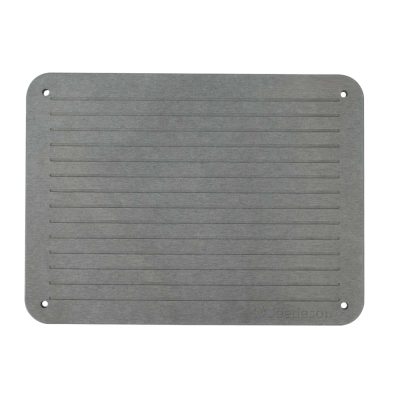
The leaf motif is engraved into the slab, not printed on it, so it stays through rinsing, sanding and years of use. It is also the reason this mat gets left out: closed against the wall it reads as a decorative stone board rather than a piece of kitchen equipment.
Performance is the same as the rest of the family. Water goes into the diatomite on contact — 0 seconds, 15 seconds, a minute, and the surface is dry again. Glasses come off without water marks, plates do not leave a puddle, and there is no fabric to launder or wring. The slab is food safe, so it doubles as a surface for vegetables when the tiers are closed.
In a small kitchen this is the drying mat for dishes that also folds into a prep surface, which is why it sells to apartment and RV owners. Open, it is a two-tier rack; closed, it is a stone mat standing against the wall. If you have the counter depth, the sturdier alternative is the three-piece set.
A dish rack that folds into a stone board, and stores in 6 cm.
What a stone drying mat does that a towel cannot
The answer to a 12 inch counter: a rack when you need one, a slab when you do not. Nothing to disassemble.
The upper tier takes the small things that never fit beside a plate stack, and both drain onto diatomite instead of into a towel.
The pattern is cut into the slab. It survives rinsing, sanding and daily use, which a print does not.
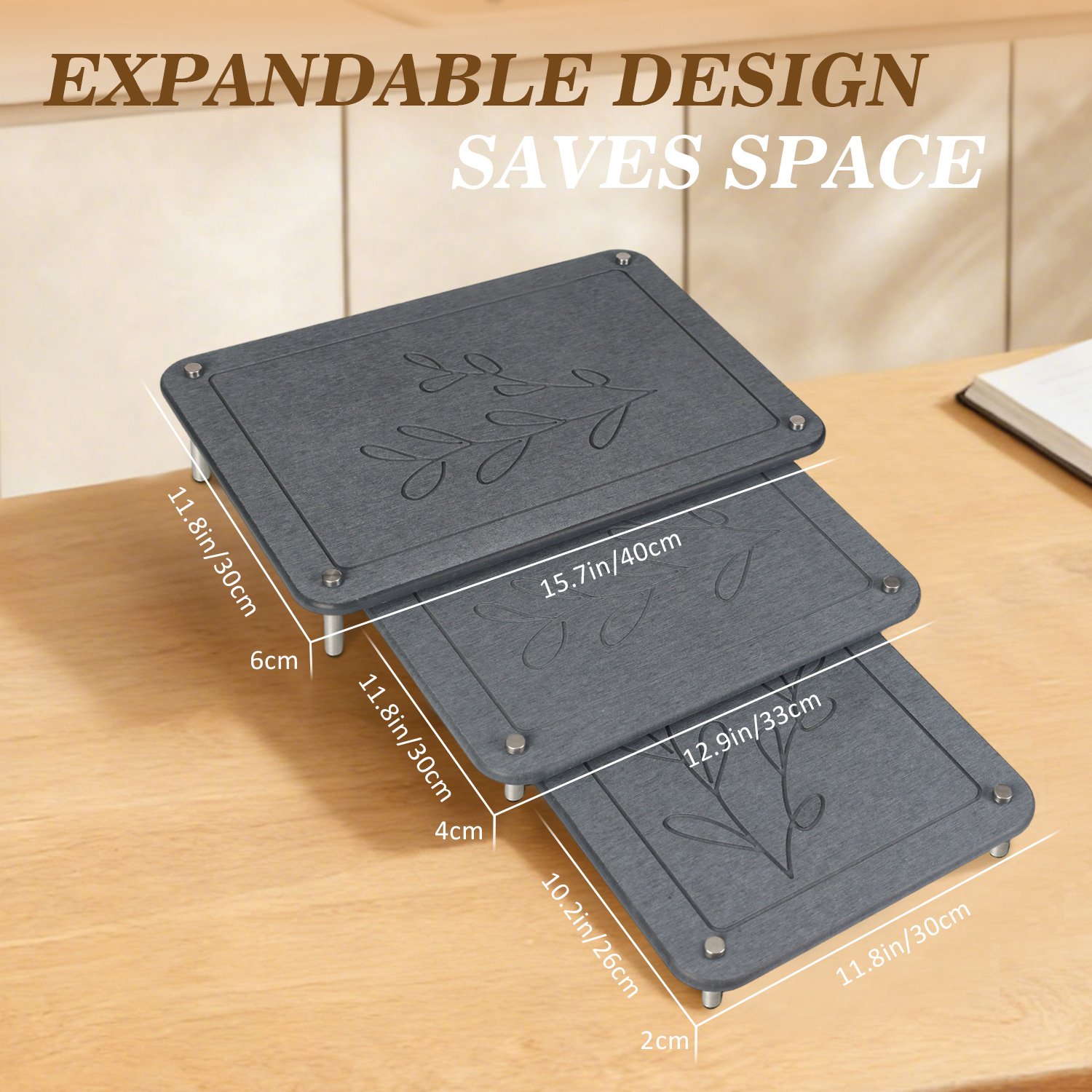
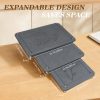
Expandable design saves space: 15 in open, 6 cm folded
The parts you only notice after a month
Air moves under the slab, so the underside dries as fast as the top and the counter stays dry.
Cut vegetables on it when it is folded flat, rinse, and it is clean. No separate board.
Folded, it stands on edge behind the tap or against the splashback, 6 cm thick.
Where a dish rack is not an option, a two-tier stone mat is: it dries more and stores thinner.
Everything on the label, plus the SKU
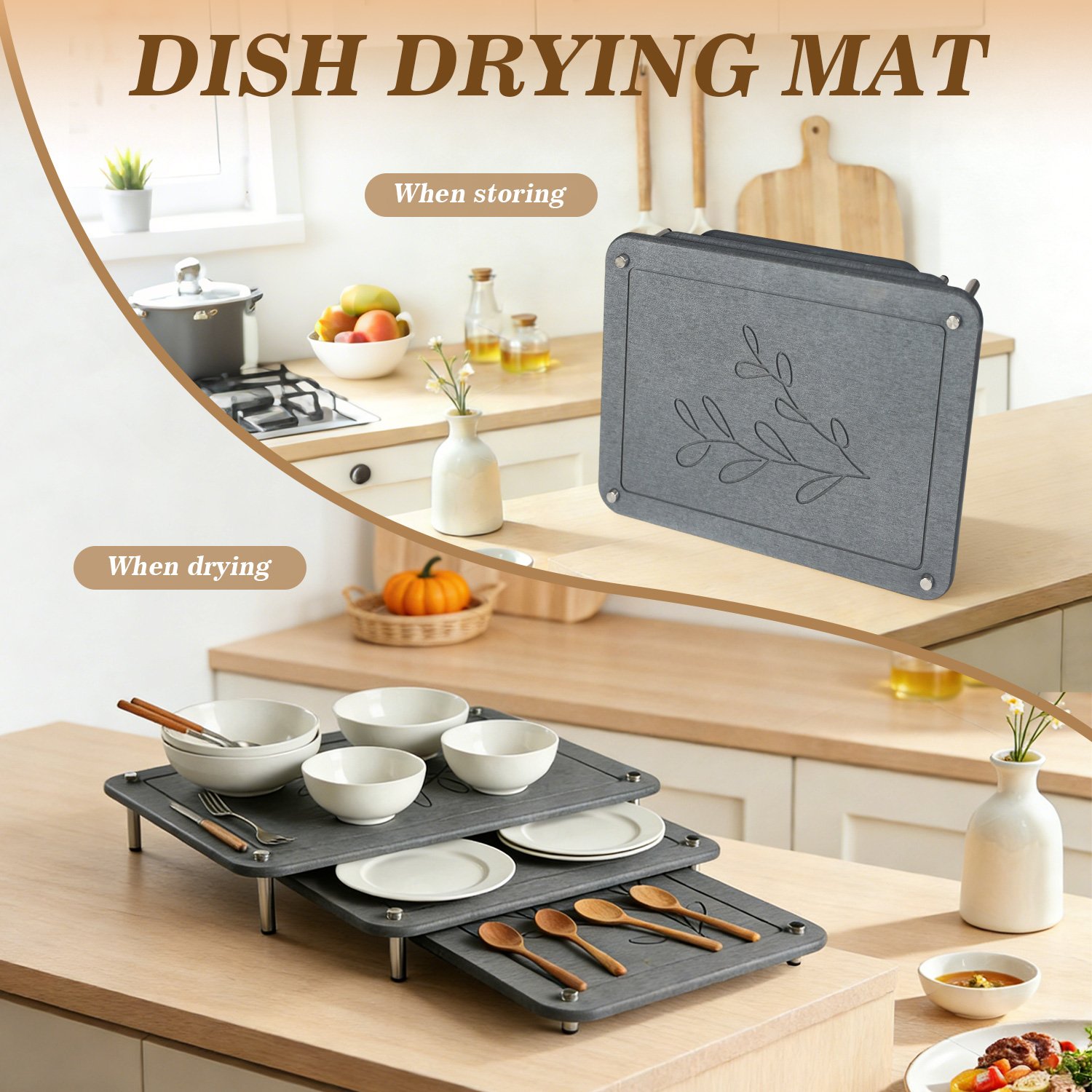
When storing, flat against the wall. When drying, two tiers.
Stone vs microfiber vs silicone dish drying mat
The reason to pay more than a supermarket mat is not the look. It is what happens to the water after the plate leaves it.
| Stone (diatomite) | Microfiber dish drying mat | Silicone dish drying mat | |
|---|---|---|---|
| Water goes | Into the slab and out as vapour | Into the fabric and stays there | Nowhere — runs into the channels and sits |
| Dry surface after 30 sec | Yes | No, damp for hours | No, wet until you wipe it |
| Smell after a week | None | Sour towel smell if not washed | None, but the water pools |
| Cleaning | Rinse, stand up, sand once a year | Machine wash every few days | Rinse and dry, then scrub the scale |
| Dishwasher | No | Yes | Yes |
| Lifespan | Years; sanding restores it | 6–18 months of washing | Years, but stains and scale build up |
| Looks like | A piece of stone on the counter | Laundry left out | A rubber mat |
Rinse, stand, sand — that is the whole routine
Water only. Rinse both tiers, then leave it open to dry before folding it away.
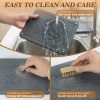
Grease and food residue come off with the sandpaper. That also restores absorbency.
Fold it only once the slab is dry, so water does not sit in the joint.
One rule: Not dishwasher safe, and do not soak it folded. Diatomite needs air on both faces to dry.
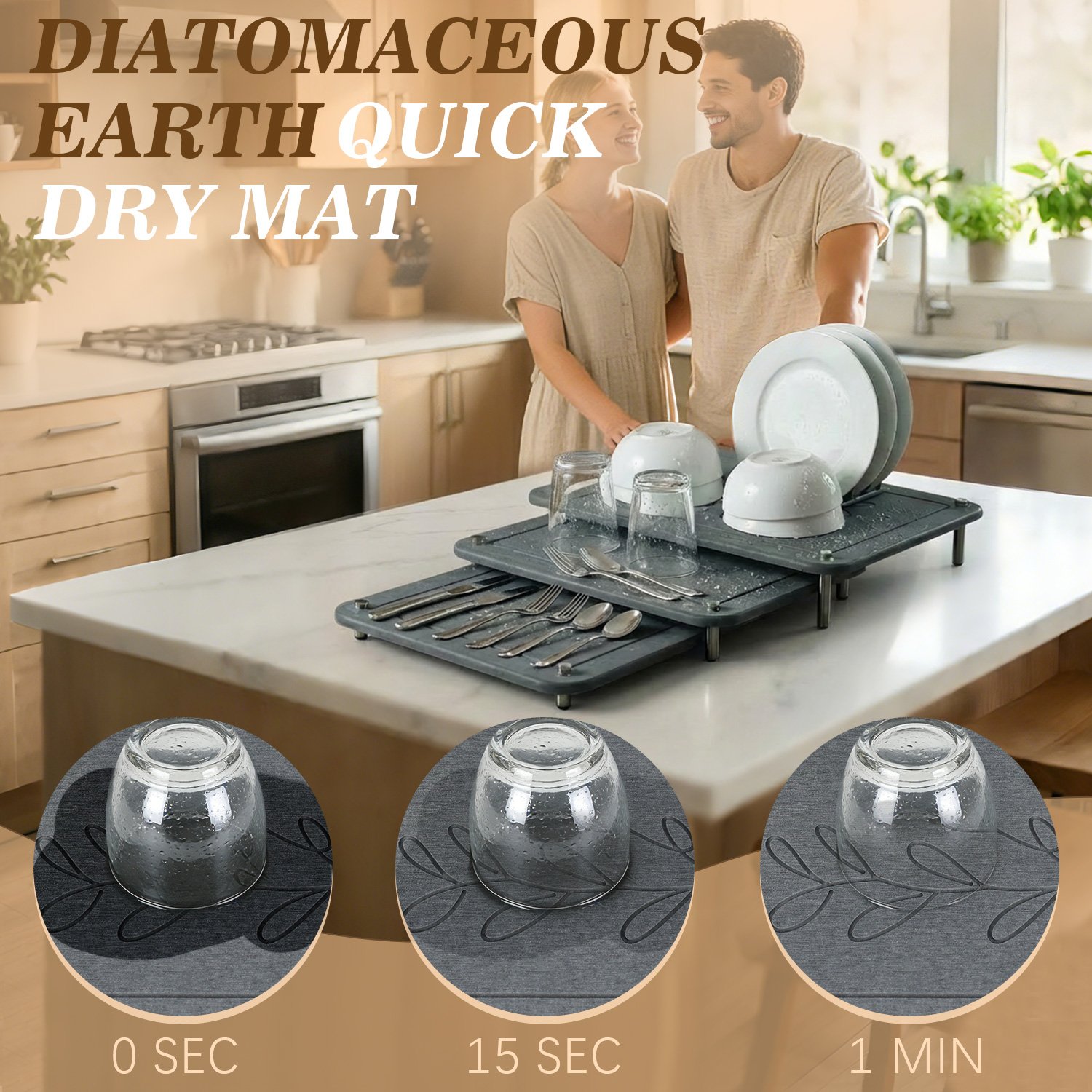
Diatomaceous earth quick dry mat: 0 seconds, 15 seconds, 1 minute
Three more places this mat ends up
Folded flat it is a board; open it is a rack. In a small kitchen that flexibility is the whole value.
A 12 inch counter, no room for a rack, and a mat that stores 6 cm thick against the wall. This is the use case the design was drawn for.
Closed and flat, it is a food-safe cutting surface. Rinse the juice off before it dries in.
Open it as a raised stand for two bowls, or fold it flat on the bathroom floor as a narrow stone bath mat.
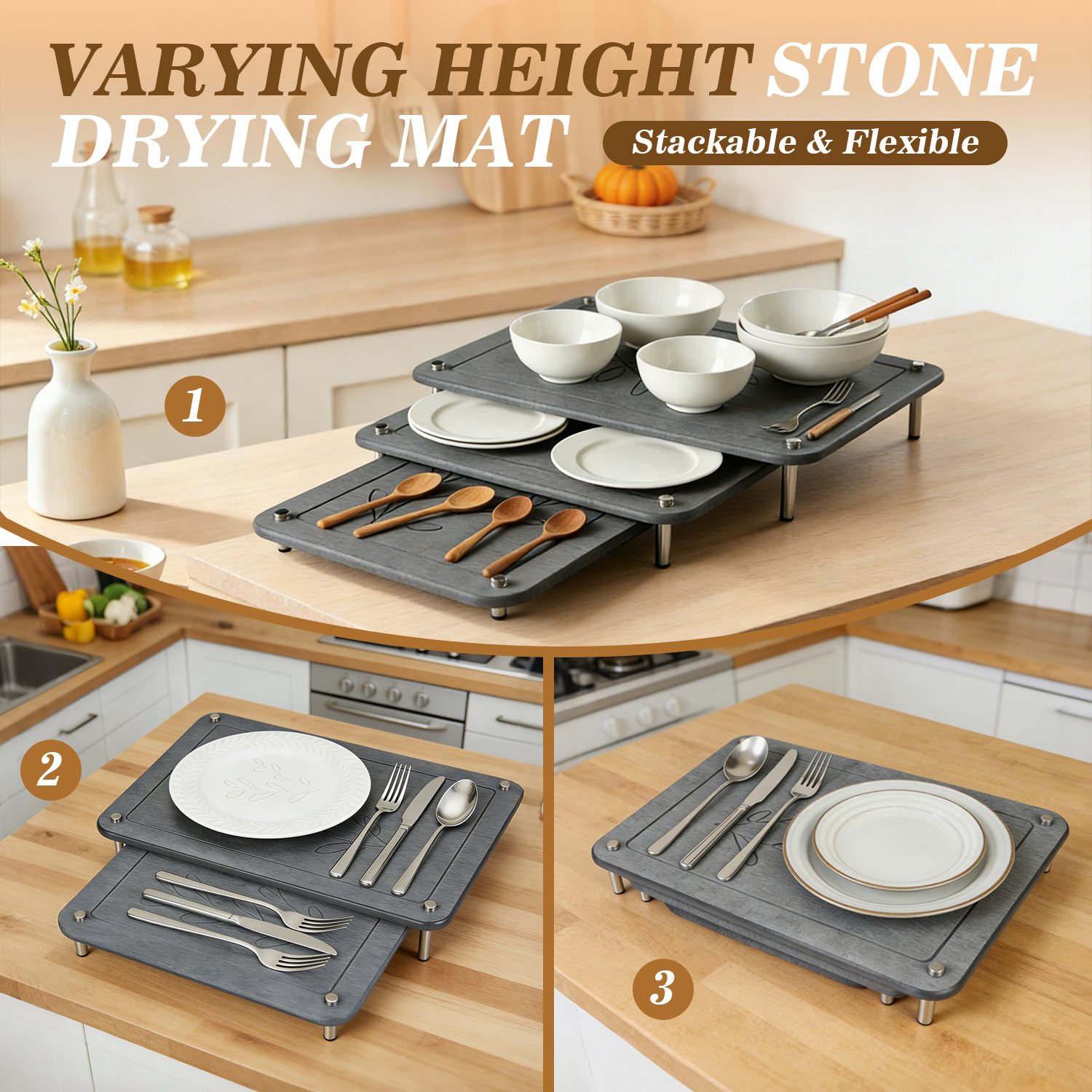
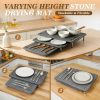
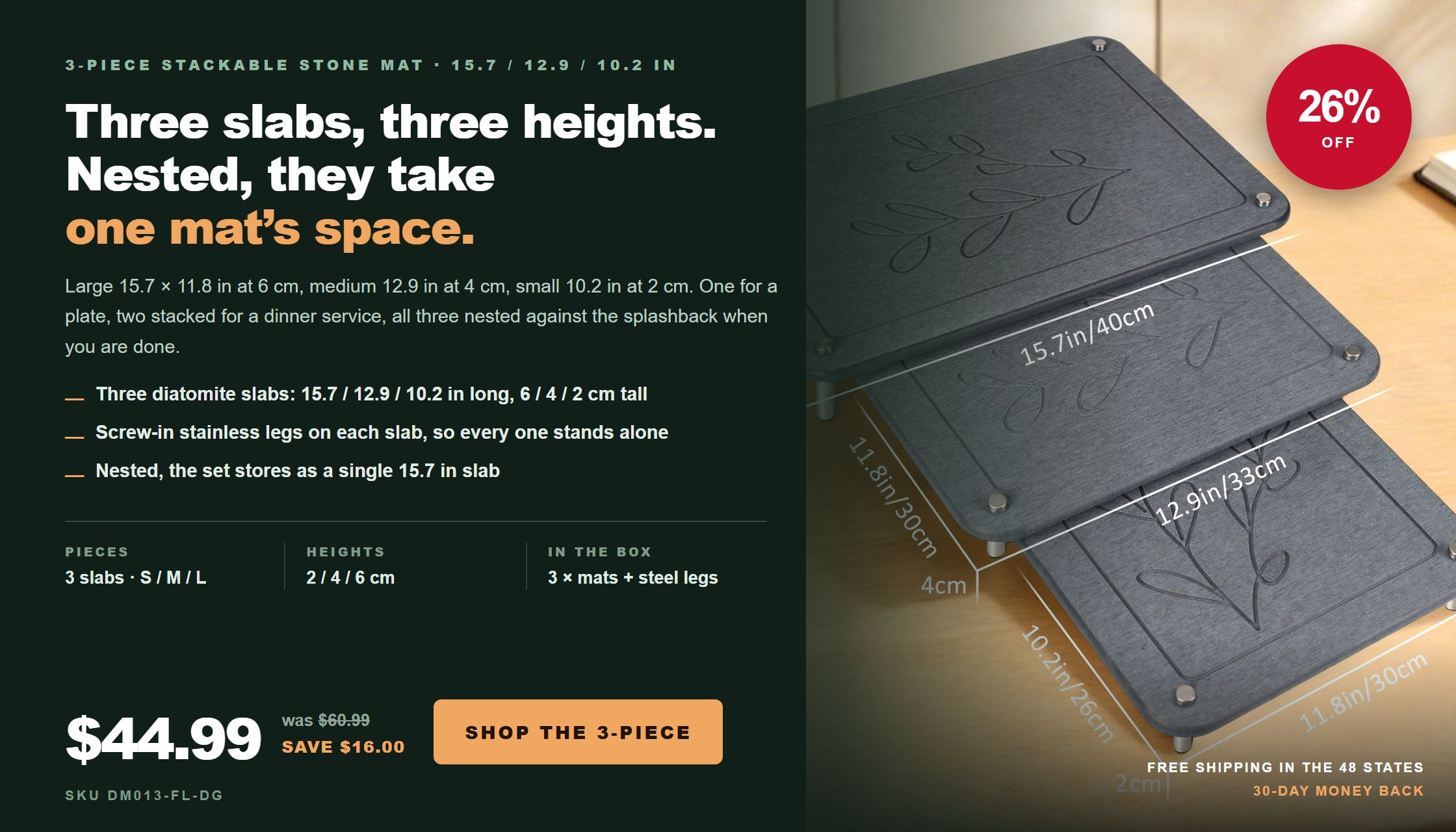
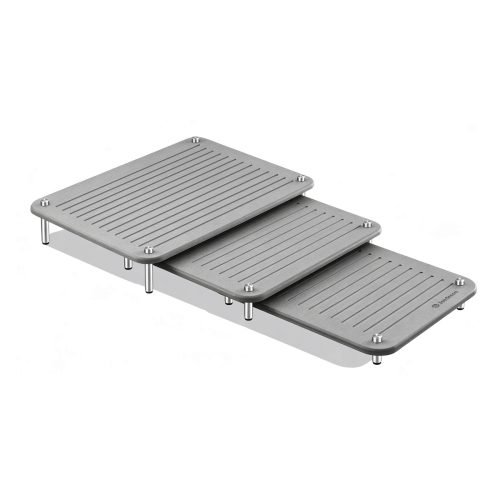
Varying height stone drying mat, stackable and flexible
What buyers ask before ordering
The front leaf is hinged to the main slab and rests on folding steel legs. Swing it out, the legs lock, and you have two levels. Fold it back and it lies flat, 6 cm thick.
The lower tier takes a plate stack and pans; the upper tier takes bowls, cups and cutlery. It is not a substitute for a full-size rack on a big dinner, but it handles daily dishes for two to three people.
Open, it needs about 15 in of depth. Most people open it away from the wall so it overhangs the front edge slightly, or open it only when the counter is clear.
Yes, when it is folded flat. The diatomite is food safe. Do not cut raw meat on it.
Engraved into the slab, so it does not rub off and survives sanding.
Rinse both faces with water, leave it open until dry, sand with fine paper when absorption slows. No soap, no dishwasher.
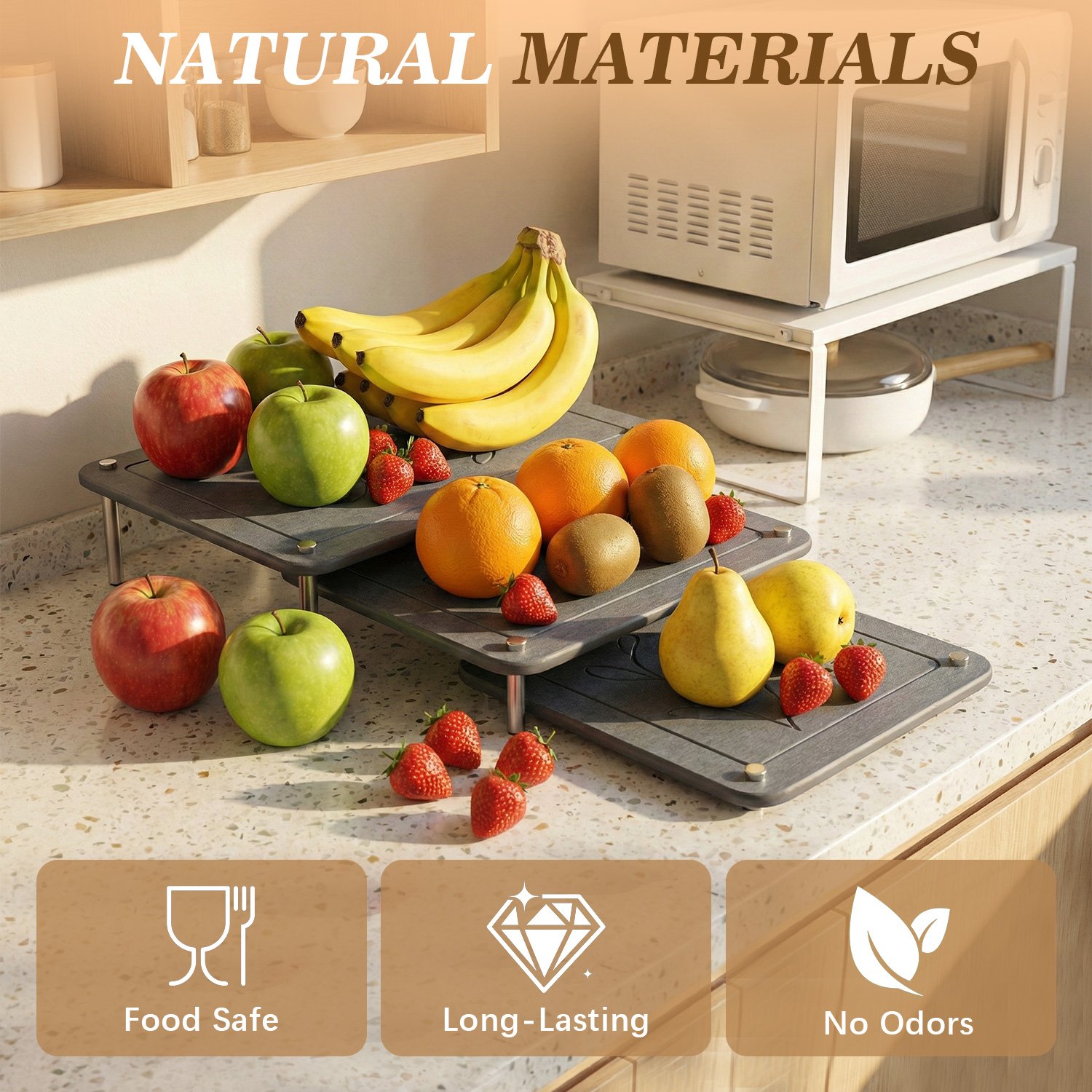
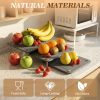
Natural materials: food safe, long lasting, no odours
Details at full size
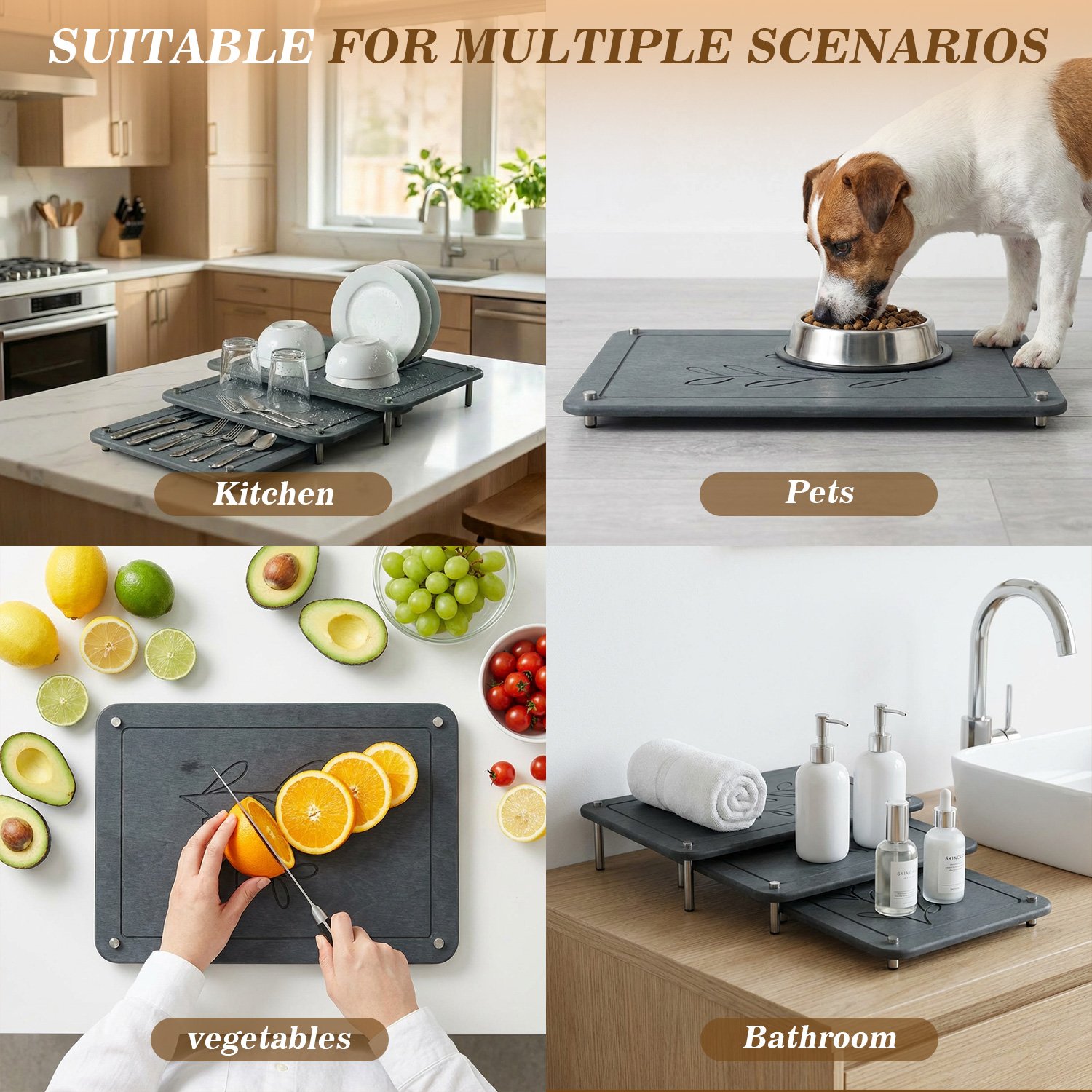
Kitchen, pets, vegetables, bathroom
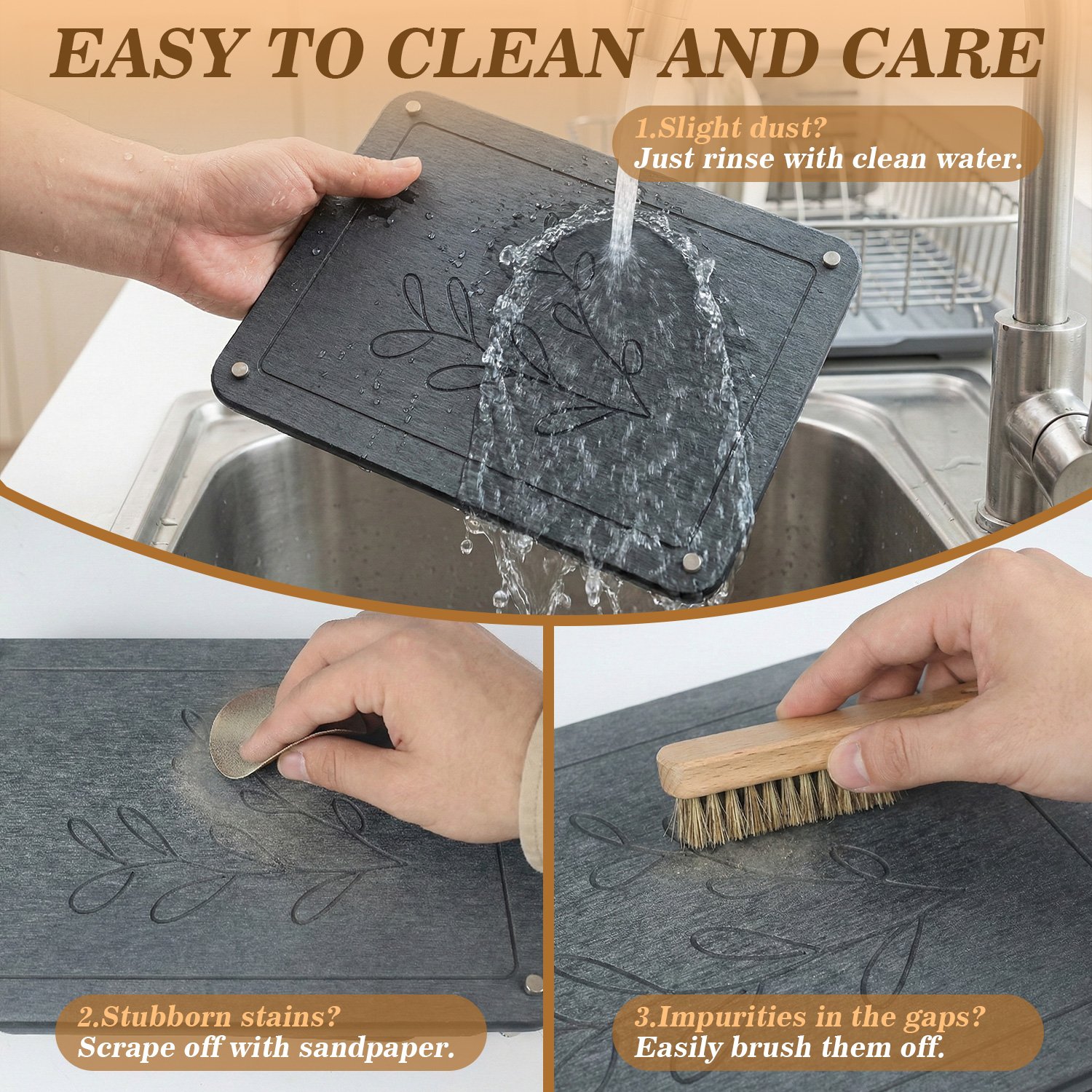
Easy to clean and care: rinse, sandpaper for stains, sandpaper for absorbency
Pick the size that fits your counter
Reviews
There are no reviews yet.