 Jeedeson Official Website


Stone Drying Mat, 15.75 × 11.81 in — the dish drying mat that drinks the water
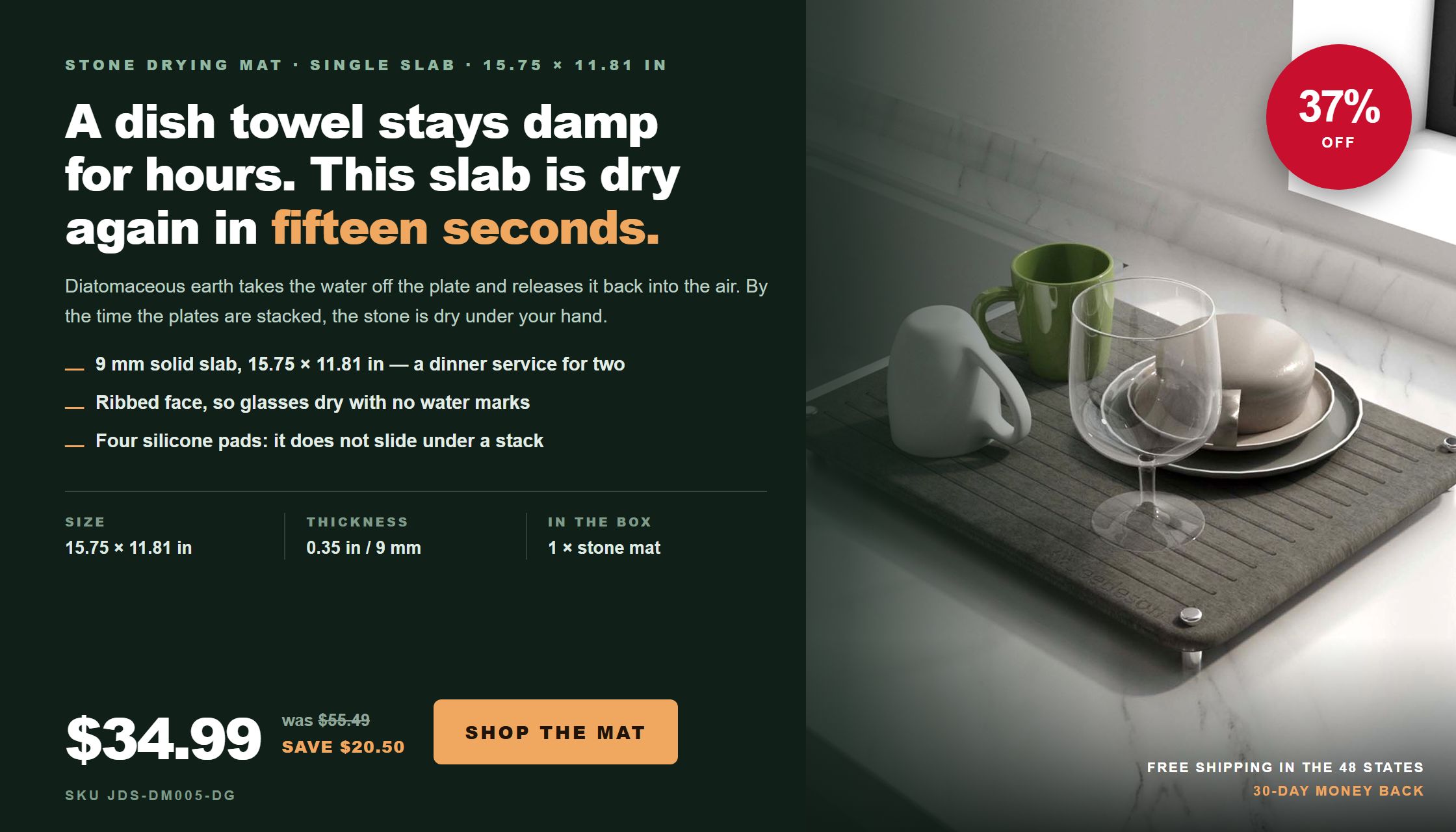
A 9 mm diatomaceous earth slab for the counter beside the sink. Plates come off dry in seconds, and there is no towel to launder.

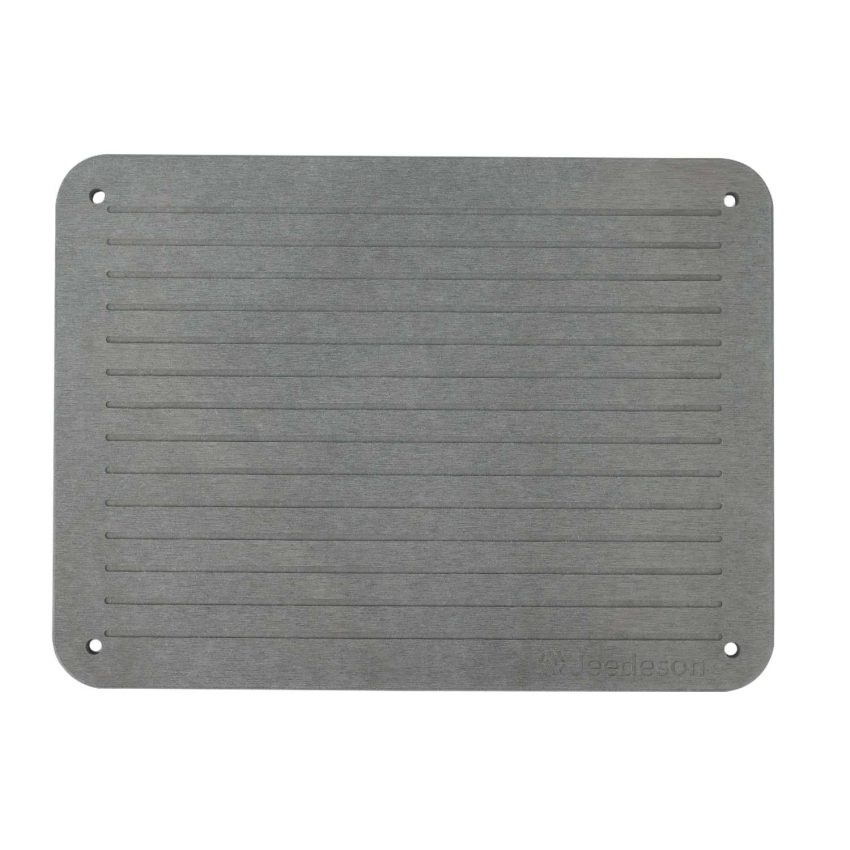
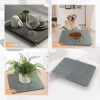
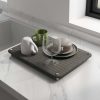
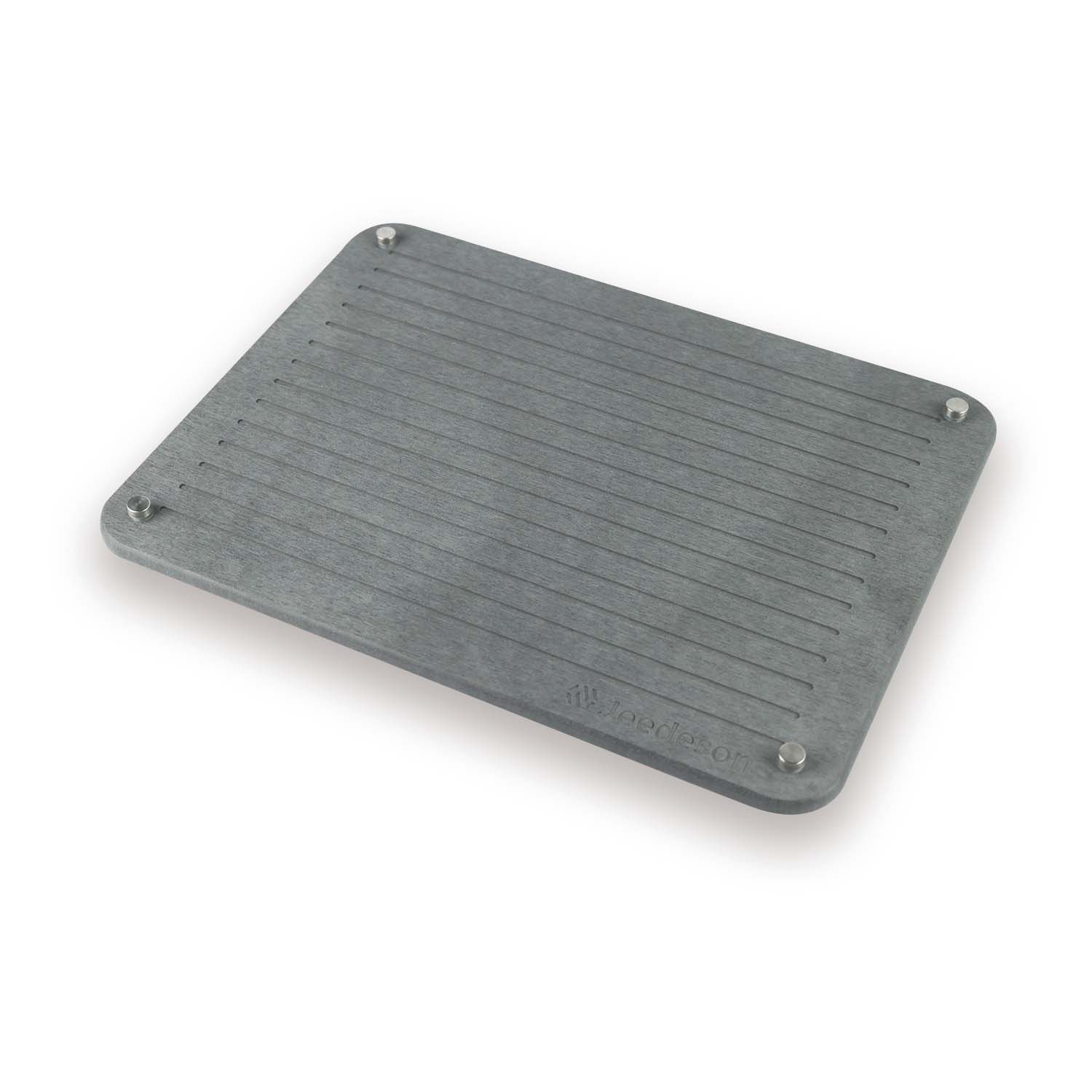
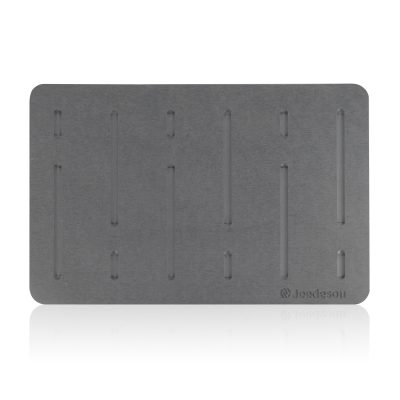
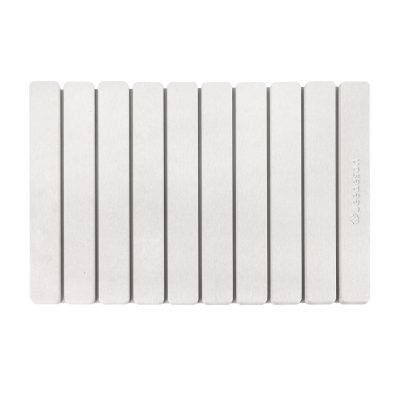
The 15.75 × 11.81 in stone drying mat, dark grey, with the ribbed face and four corner pads
A cloth dish drying mat does one job well and one job badly: it catches the drip, then keeps it. By the second evening a microfiber dish drying mat smells of the sink, and every clean plate that touches it picks that smell back up. This stone drying mat works the other way round. The slab is diatomaceous earth — the fossilised shells of diatoms, pressed and baked into a 9 mm plate — and it is full of microscopic pores. Water does not sit on the surface. It goes in.
That is the whole idea behind a stone dish drying mat, and it is why the face feels bone dry again about fifteen seconds after a dripping plate comes off it. Put one on the counter to the right of the sink and the whole run of wet plates, glasses and cutlery has somewhere to land that is not a towel. The ribbed face keeps glass off the stone so nothing squeaks, and four silicone corner pads stop the slab skating when you stack plates on it one-handed.
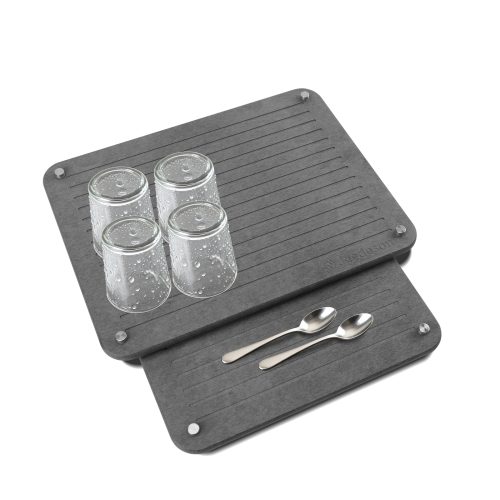
At 15.75 × 11.81 in (40 × 30 cm) it holds a dinner service for two, or a plate stack plus four glasses. It is the size most people want for a stone drying mat for kitchen counter duty: big enough to be useful, small enough to stand on its edge behind the tap when the counter has to be clear.
Search results for dish drying mat are full of cloth and microfiber, which is the reason a stone version is worth the extra: nothing to wring out, nothing to wash. If you want the short answer to which is the best dish drying mat for a two-person kitchen, it is the one that is already dry before the next plate arrives. The same slab also works as a kitchen drying mat under the coffee machine and as a small stone mat for the pet bowls.
A towel dries a plate by taking the water. This one dries it by taking the water away.
What a stone drying mat does that a towel cannot
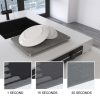
Watch a puddle on the surface turn into a dark patch, then shrink and disappear. Three stages, under a minute, no wiping.
A cloth mat stays damp for hours and that is what breeds the smell. Diatomite passes the water into the air within minutes, so there is nothing left to go sour.
The pads grip quartz, granite and laminate. Load a dinner service on it and the mat does not walk across the counter.
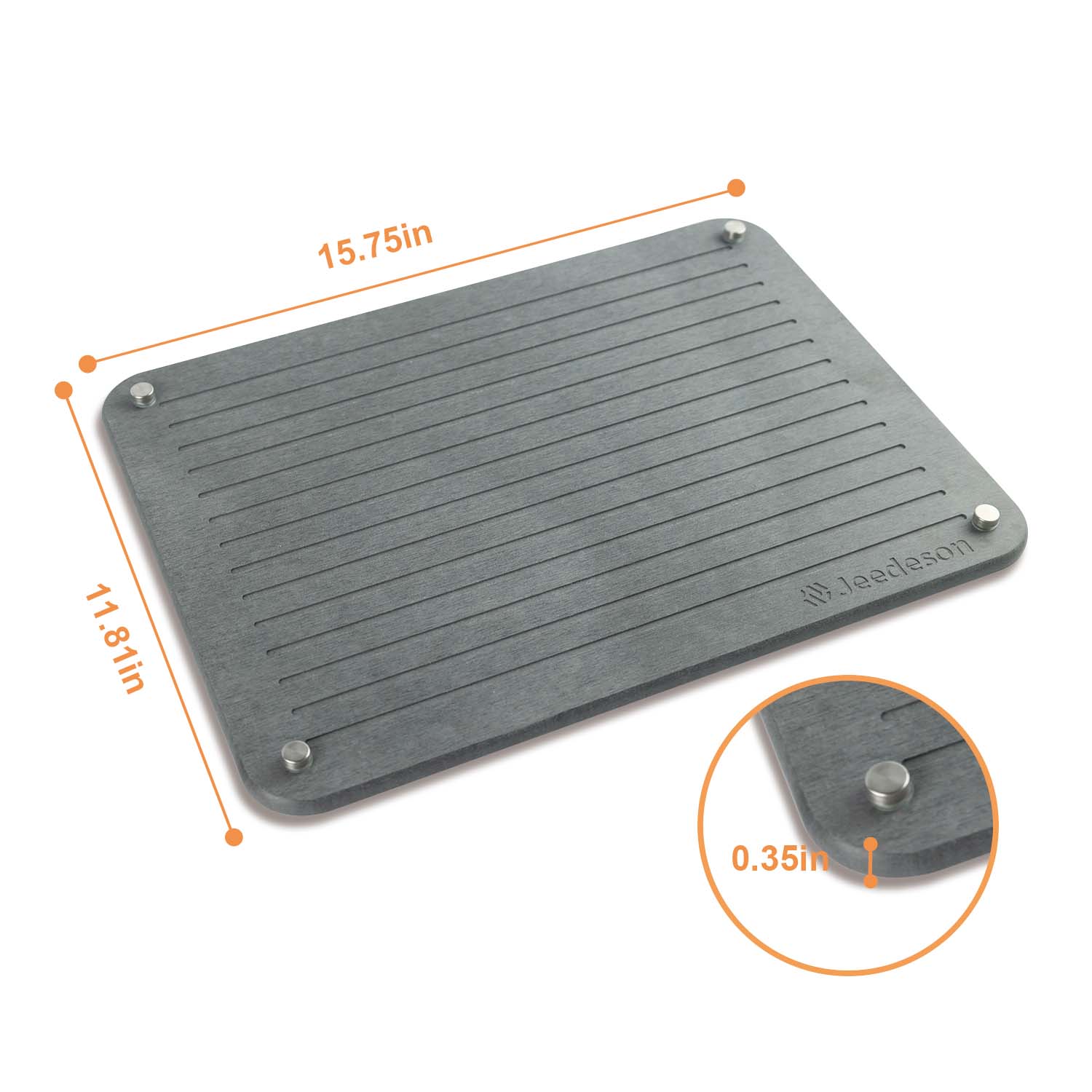
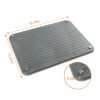
Size and thickness: 15.75 in × 11.81 in, 0.35 in / 9 mm slab
The parts you only notice after a month
Water that runs off a plate stops at the slab instead of spreading under the dish rack. The counter stays dry enough to put a cutting board down.
The shallow ribs lift wine glasses and tumblers off the stone, so the bases dry without water marks and nothing slides when you reach past.
Pressed diatomite, not a coated board. It does not curl at the corners after a month, and it holds its shape under a stack of plates.
No soap, no dishwasher, no scrubbing. Rinse it, stand it up, and once a year run fine sandpaper over the face to open the pores again.
Everything on the label, plus the SKU
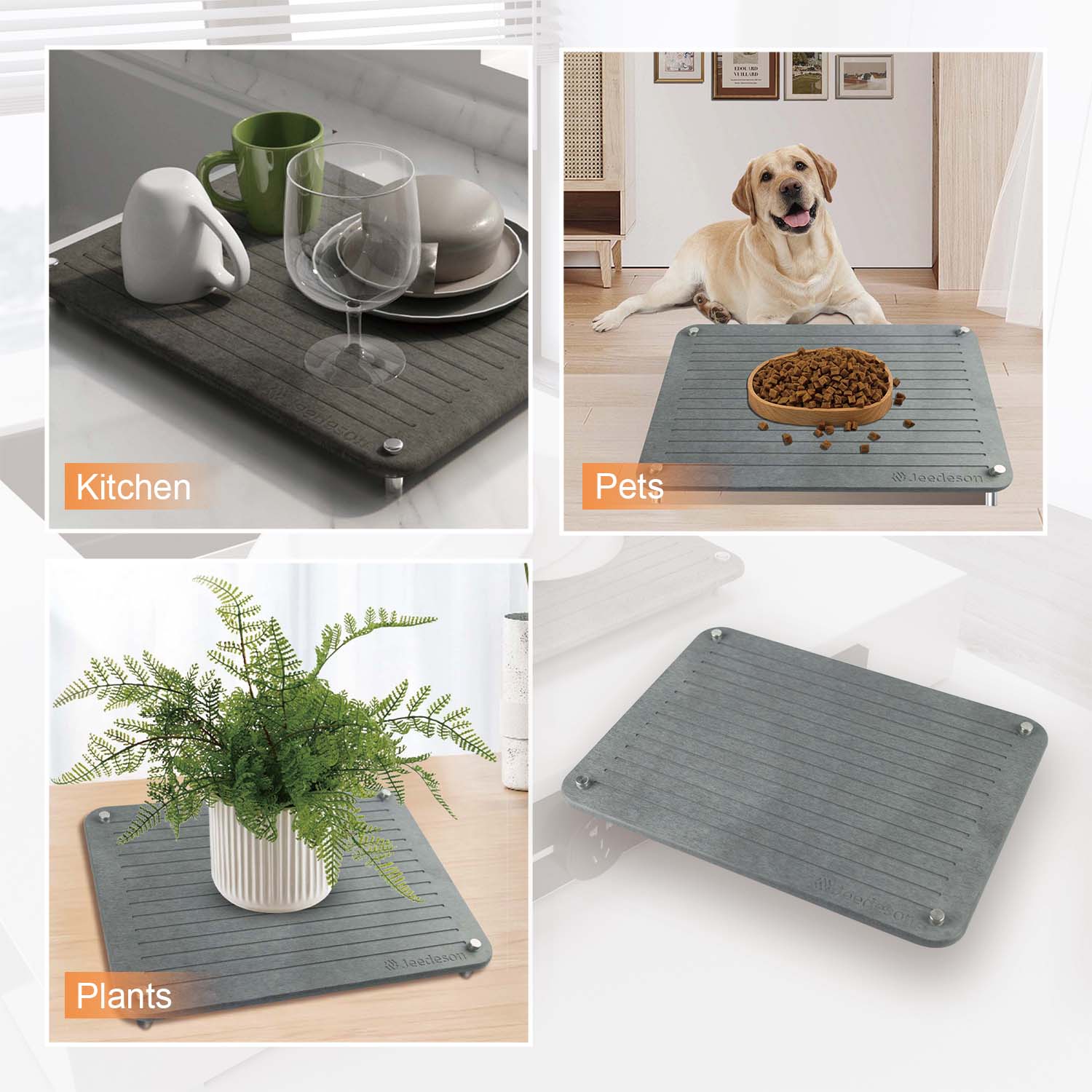
One slab, four places: kitchen, pets, plants, and the counter beside the sink
Stone vs microfiber vs silicone dish drying mat
The reason to pay more than a supermarket mat is not the look. It is what happens to the water after the plate leaves it.
| Stone (diatomite) | Microfiber dish drying mat | Silicone dish drying mat | |
|---|---|---|---|
| Water goes | Into the slab and out as vapour | Into the fabric and stays there | Nowhere — runs into the channels and sits |
| Dry surface after 30 sec | Yes | No, damp for hours | No, wet until you wipe it |
| Smell after a week | None | Sour towel smell if not washed | None, but the water pools |
| Cleaning | Rinse, stand up, sand once a year | Machine wash every few days | Rinse and dry, then scrub the scale |
| Dishwasher | No | Yes | Yes |
| Lifespan | Years; sanding restores it | 6–18 months of washing | Years, but stains and scale build up |
| Looks like | A piece of stone on the counter | Laundry left out | A rubber mat |
Rinse, stand, sand — that is the whole routine
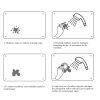
Hold it under running water for a few seconds and let the surface drain. No soap — a soap film dulls the face and slows absorption.
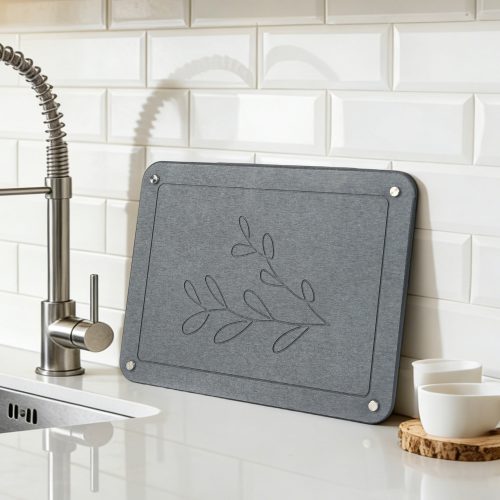
Prop it against the backsplash or stand it on its edge after use. A stone drying mat left flat and wet stays wet underneath.
When water starts to sit on the surface instead of vanishing, a light pass with the fine sandpaper opens the pores again. Two minutes, done.
One rule: Never put a diatomite mat in the dishwasher or soak it in the sink — it is a porous stone, not plastic. Rinse, stand, air dry.
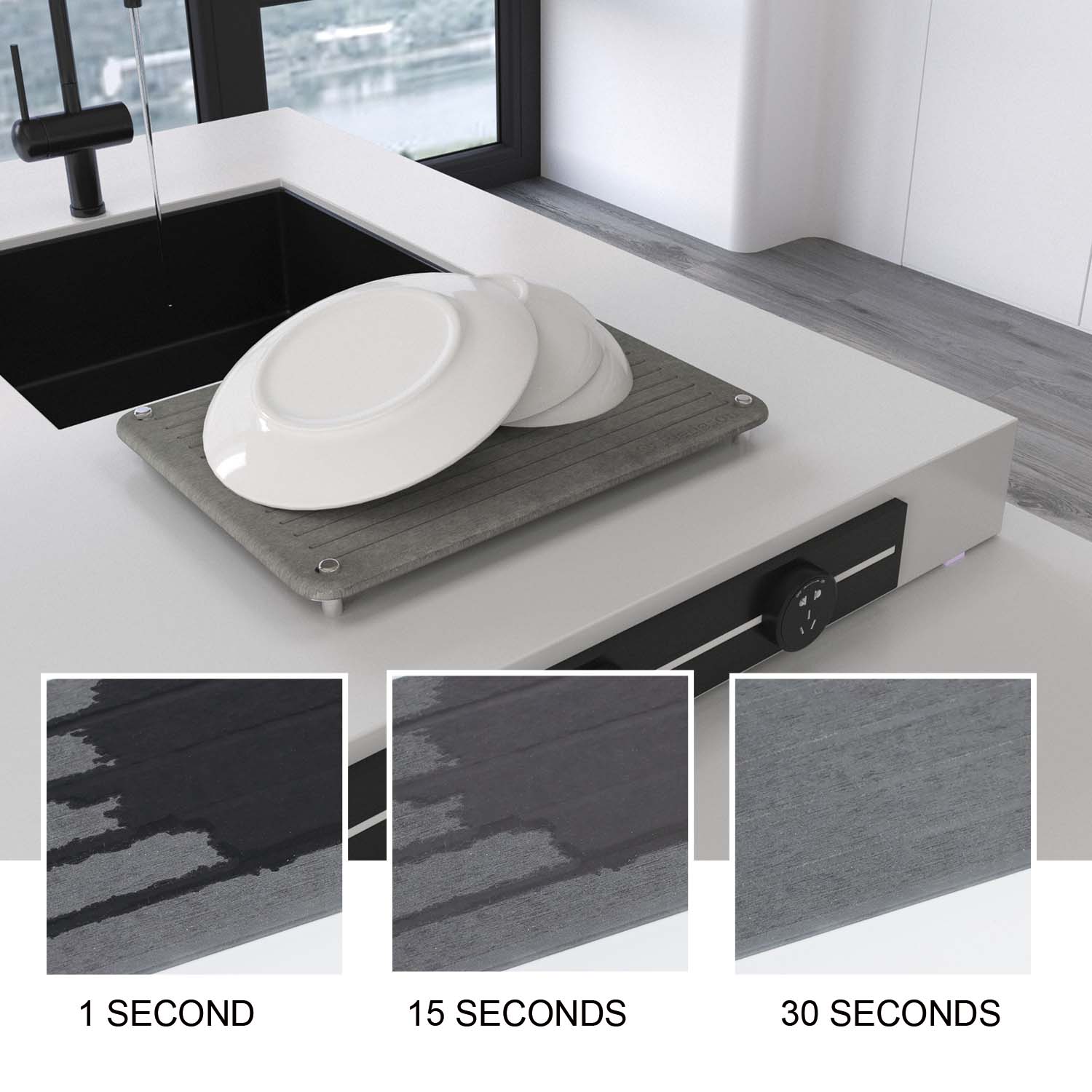
Water leaves the surface in 1 second, 15 seconds and 30 seconds
Three more places this mat ends up
The same slab does four jobs in a house. Most people buy it as a dish drying mat and find the second and third use within a week.
Standing a wet toothbrush cup and soap dish on stone keeps the vanity top dry — and it does the job of a small stone bath mat in front of the basin.
Two bowls on a 9 mm slab: no water ring on the floor, no mat to wring out. The weight of the stone also stops the bowls sliding.
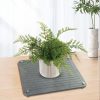
Pots drain onto stone instead of wood. The slab takes the overflow and dries before the next watering.
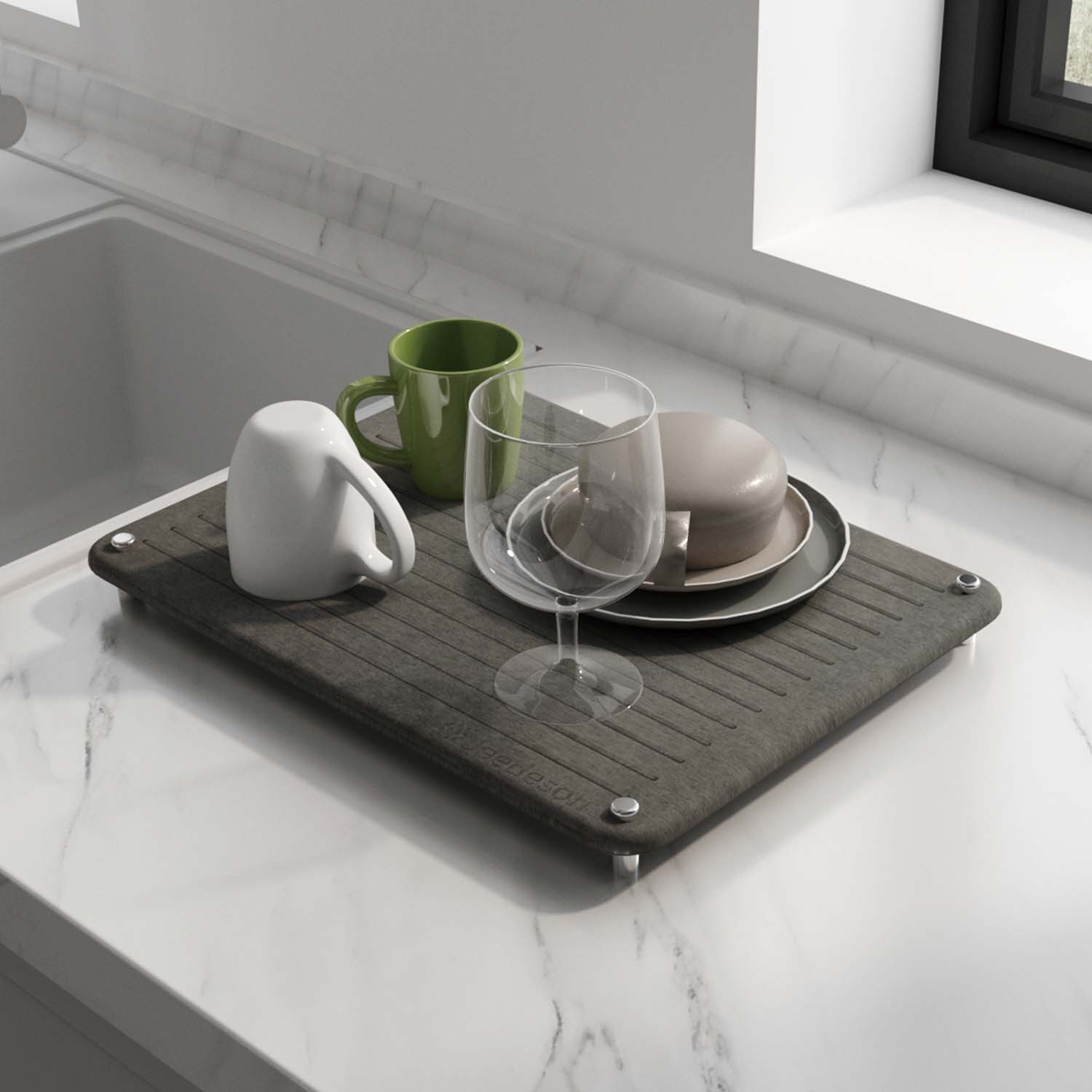
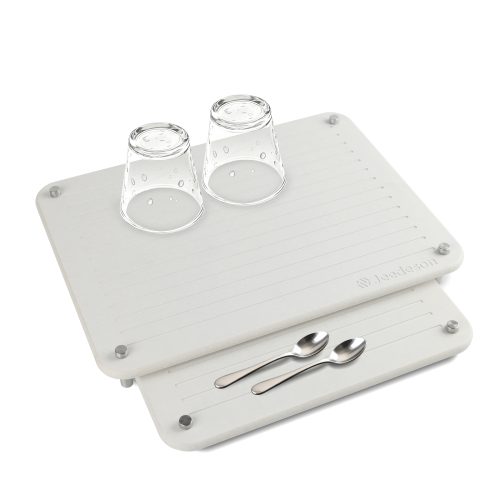
Glasses and a plate on the ribbed face beside the sink
What buyers ask before ordering
Rinse it under running water and stand it up to dry. Grease or tea stains come off with a drop of dish soap on a sponge, then rinse again. For marks that have soaked in, rub the face with fine sandpaper (180–220 grit) — that also restores absorption.
It dries the side that touches it, in seconds, because the water is pulled into the pores. It is contact drying, not air drying: stack plates flat on the stone, or lean them so the wet face meets the slab. A dish cloth is still useful for the far side of a stack.
No. The base is flat and matte, and the four silicone pads keep the stone off the surface. Nothing sharp is exposed.
No. Heat and detergent break down the diatomite structure. Rinse and air dry is the whole cleaning routine.
Pores clog with grease and mineral film. Sanding the surface with fine paper opens them again — most households do this once every 12 to 18 months.
For drying, yes: cloth holds the water and passes it back, stone takes it in and releases it as vapour. A microfiber dish drying mat is cheaper and machine washable, but it needs washing every few days.
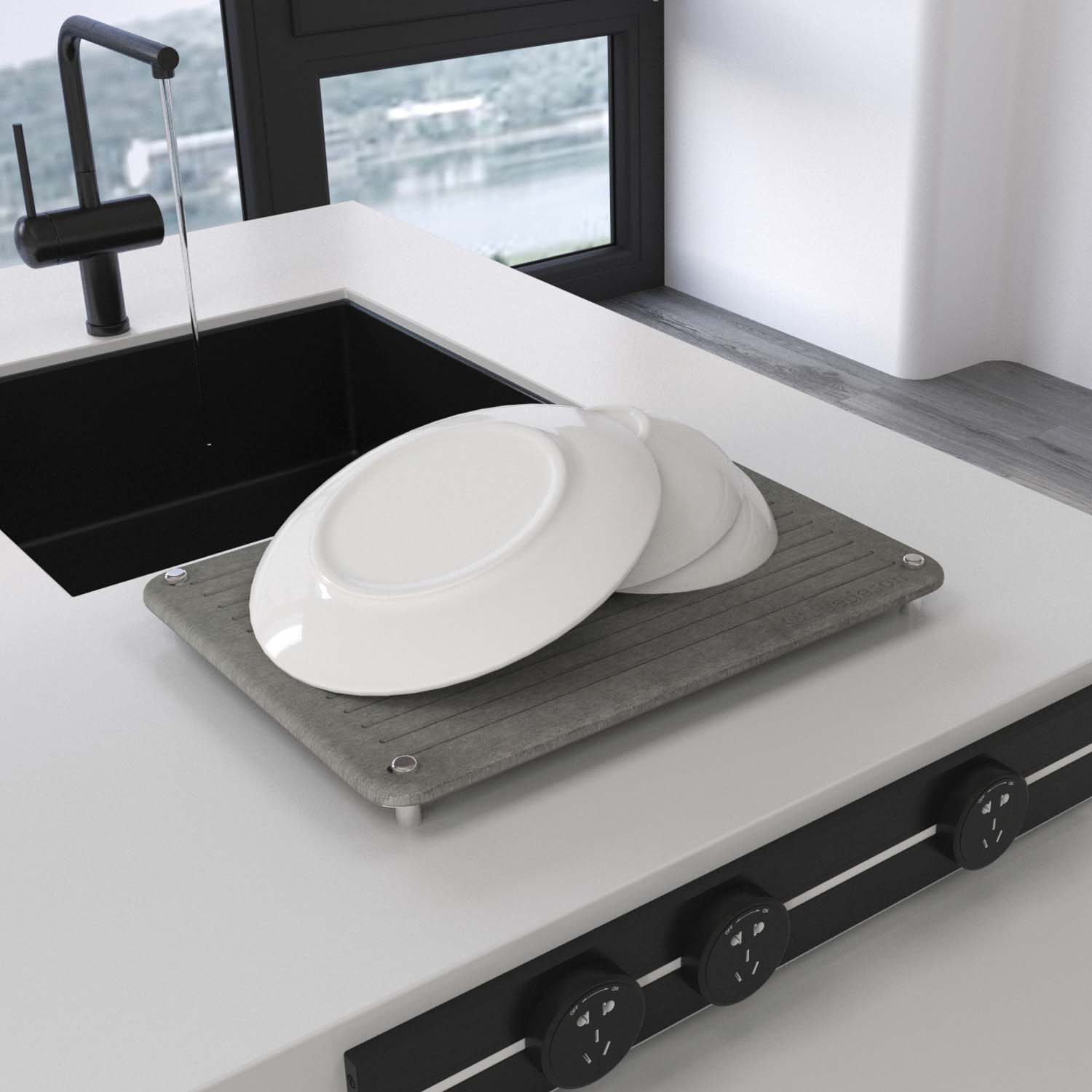
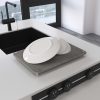
A dinner service draining on the slab next to a black sink
Details at full size
Corner pads and 9 mm edge
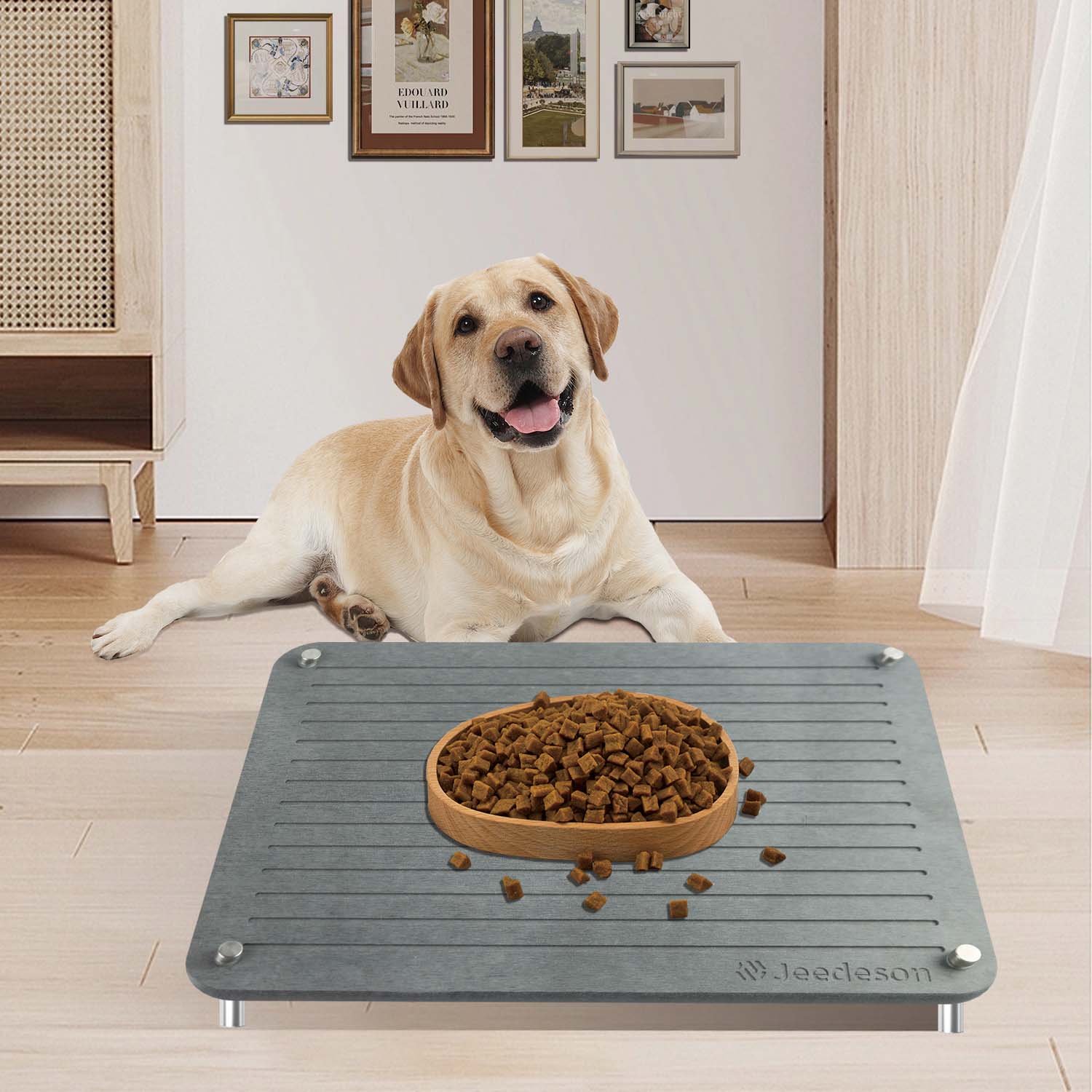
Under the dog bowls
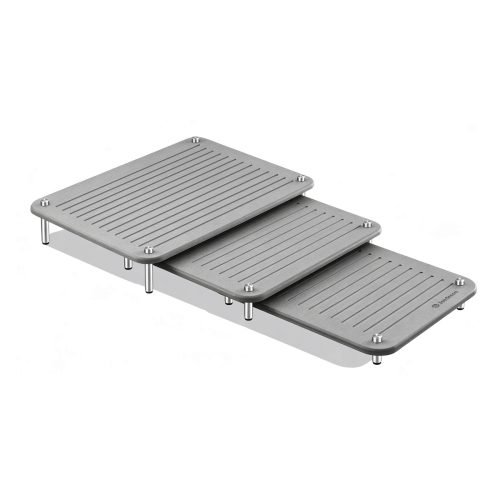
Pick the size that fits your counter
Reviews
There are no reviews yet.